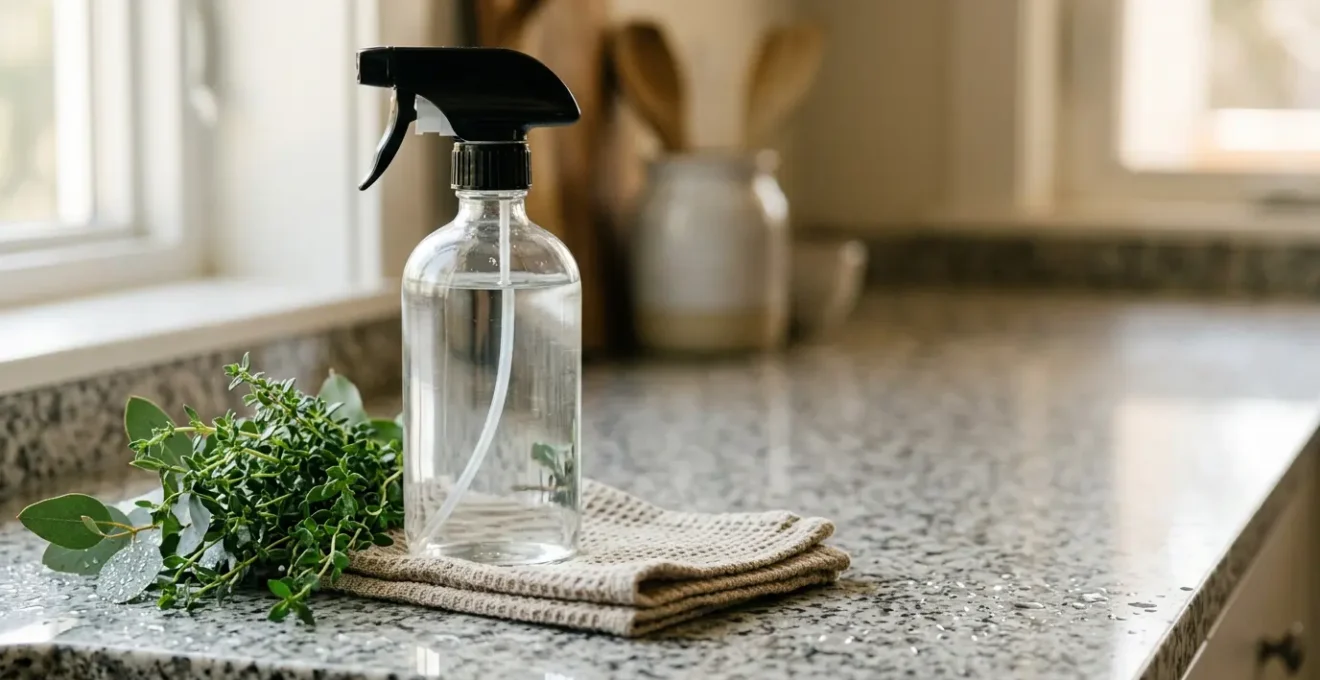
Contrary to popular belief, “biodegradable” does not automatically mean “disinfecting,” and many common DIY green cleaning hacks are chemically ineffective.
- The effectiveness of a cleaner depends on task-specific chemistry, not just its “natural” origin. Disinfection requires specific agents that are proven to kill pathogens.
- Mixing common ingredients like vinegar and baking soda neutralizes them, creating little more than salty water with no significant cleaning or disinfecting power.
Recommendation: To truly disinfect, focus on products with proven biodegradable disinfecting agents (like citric acid or thymol) or use a two-step process: clean first with a biodegradable soap, then sanitize with a targeted, approved disinfectant.
As a parent, the question of kitchen hygiene is non-negotiable. You wipe down the counter after preparing raw chicken, and you need absolute certainty that you’ve eliminated pathogens like Salmonella. For years, the go-to solution has been harsh chemical disinfectants, but a growing awareness of their impact on indoor air quality and home ecosystems—like septic tanks—has pushed many towards “green” or “biodegradable” alternatives. This shift, however, brings a new anxiety: are these gentle, plant-derived sprays actually powerful enough to do the job? The market is flooded with products promising eco-friendly safety, and the internet is filled with DIY recipes involving vinegar and baking soda.
The core of the issue lies in a misunderstanding. We often use the words “clean” and “disinfect” interchangeably, but in chemistry, they are worlds apart. Cleaning involves using surfactants to lift and remove dirt and microbes from a surface. Disinfecting involves using a chemical agent to kill a high percentage of pathogens present. A product can be an excellent biodegradable cleaner but a poor disinfectant. The key to a truly safe and sustainable home is not finding one magic bottle, but understanding the right chemical principle for the right task. This requires moving beyond marketing claims and looking at the science.
This article, guided by the principles of green chemistry, will demystify the world of eco-friendly cleaning. We will explore the hidden downsides of conventional chemicals, debunk popular but ineffective natural cleaning myths, and equip you with the knowledge to identify genuinely effective products. From protecting sensitive stone surfaces to minimizing plastic waste and even caring for the finer details like rugs and light fixtures, you will learn how to apply task-specific chemistry for a home that is both spotlessly clean and scientifically safe for your family.
To navigate this complex topic, this article breaks down the most critical questions and misconceptions surrounding effective, eco-conscious cleaning. Explore the sections below to build your expertise from the ground up.
Summary: Do Biodegradable Cleaners Really Disinfect Kitchen Counters Effectively?
- Why Bleach is the Enemy of Your Septic Tank and What to Use Instead?
- Vinegar and Baking Soda: The Science Behind Why Mixing Them Is Useless
- Greenwashing 101: How to Spot Fake Eco-Labels on Cleaning Products?
- How to Clean Unsealed Stone Without Acid Damage?
- Refill Tablets vs. Bulk Buying: Which Cleaning Method Uses Less Plastic?
- Why You Should Never Rub a Stain on a High-Pile Rug
- The Cleaning Mistake That Ruins the Matte Finish on Light Fixtures
- Is Installing a Graywater System Worth the Permit Hassle?
Why Bleach is the Enemy of Your Septic Tank and What to Use Instead?
For decades, chlorine bleach has been the gold standard for disinfection. Its power to kill germs is undeniable. However, for homes with a septic system, this power comes at a significant cost. A septic tank is not a sterile holding container; it’s a living ecosystem. It relies on a delicate balance of beneficial bacteria to break down solid waste. When you pour bleach down the drain, you’re introducing a potent biocide into this environment. Even small quantities can have a devastating effect. In fact, research highlights that bleach can kill up to 99% of the bacteria in a septic system, effectively halting the decomposition process. This leads to solid waste buildup, clogs, and potentially costly system failure.
This doesn’t mean your system is doomed at the first sign of bleach. The key is moderation, as septic systems can recover from small, infrequent exposures. As noted by the experts at Advanced Septic Services:
Moderate use of bleach will not throw your septic system out of balance. Moderate use is the amount used in one normal size load of laundry (3/4 cup) or the amount used in an application of toilet bowl cleaner.
– Advanced Septic Services, Chlorine Bleach and Septic Systems Safety Guidelines
So, what are the alternatives for effective, septic-safe disinfecting? Look for cleaners based on citric acid or hydrogen peroxide. These substances are effective disinfectants but break down into harmless components (water and oxygen in the case of hydrogen peroxide) much more readily, preserving the bacterial health of your septic system. Another excellent option is cleaners using thymol, a component of thyme oil, which is a powerful and biodegradable botanical disinfectant. The goal is to choose a disinfectant that targets pathogens on your surfaces without waging war on the essential ecosystem below your home.
Vinegar and Baking Soda: The Science Behind Why Mixing Them Is Useless
It’s the most famous DIY cleaning recipe on the internet: a fizzy, bubbling volcano of vinegar and baking soda, heralded as an all-purpose, non-toxic miracle cleaner. The vigorous fizzing certainly looks impressive, giving the illusion of a powerful cleaning action. However, from a chemical standpoint, this popular mixture is almost entirely useless for cleaning or disinfecting. The dramatic fizz is the result of an acid-base reaction. Vinegar is acetic acid, and baking soda is sodium bicarbonate, a base. When you mix them, they react to form water, a salt (sodium acetate), and carbon dioxide gas—the bubbles.
Once the fizzing stops, what you’re left with is essentially slightly salty water. You have effectively neutralized both the acid and the base, eliminating the very properties that made them useful cleaning agents in the first place. Vinegar on its own is a great mild acid for dissolving mineral deposits, while baking soda is a gentle abrasive for scrubbing. Mixed, they are neither. Furthermore, chemistry research shows that over 99% of the added baking soda remains as a solid after the reaction, meaning it hasn’t even fully dissolved to participate in any meaningful cleaning.
As the image above illustrates, the reaction is visually dynamic but chemically counterproductive. For effective green cleaning, use these ingredients separately. Use a paste of baking soda and a small amount of water to scrub a grimy surface. Then, rinse and spray with vinegar to tackle hard water stains. By applying them sequentially, you leverage their individual chemical strengths without canceling them out. This “task-specific chemistry” approach is far more effective than the theatrical but impotent fizz of mixing them together.
Greenwashing 101: How to Spot Fake Eco-Labels on Cleaning Products?
As consumers increasingly demand safer, more sustainable products, many companies have responded with “greenwashing”—the practice of using vague, misleading, or unsubstantiated claims to deceive consumers into believing their products are environmentally sound. You’ve seen the labels: “eco-safe,” “earth-friendly,” “natural,” or simply a package adorned with green leaves. These terms are often legally meaningless and serve only to create a false impression of environmental or health benefits. This marketing tactic preys on good intentions and creates significant confusion. In fact, recent studies reveal that 26% of Americans don’t know how to identify sustainable products, making them vulnerable to these deceptive practices.
The U.S. Environmental Protection Agency (EPA) explicitly warns consumers about this issue. Their guidance emphasizes the need for skepticism toward broad, undefined marketing terms. As the EPA states in its guidelines for consumers:
It is important for consumers to be careful in interpreting vague or generic claims on products such as ‘environmentally friendly,’ ‘eco safe,’ or ‘green’ (also known as ‘greenwashing’).
– U.S. Environmental Protection Agency, Identifying Greener Cleaning Products Guidelines
So, how can a concerned parent see through the fog? First, ignore vague marketing claims and look for specifics. A legitimate green product will list its ingredients clearly. Second, look for reputable, third-party certifications. Labels like the EPA’s “Safer Choice” seal, “Green Seal,” or “ECOLOGO” indicate that a product has been independently verified to meet stringent health and environmental standards. These certifications test for everything from ingredients to performance and even packaging. Finally, be wary of imagery. A picture of a flower on the bottle means nothing if the ingredients list is full of harsh chemicals. True eco-friendliness is found in scientific evidence and transparent certification, not in clever branding.
How to Clean Unsealed Stone Without Acid Damage?
Natural stone countertops, like marble, travertine, or limestone, bring a beautiful, organic element to a kitchen. However, their porous and chemically sensitive nature makes them uniquely vulnerable to damage from improper cleaning. Unlike ceramic or laminate, these stones are primarily composed of calcium carbonate. This makes them highly reactive to acids. Using a common cleaner like vinegar (acetic acid) or even many conventional all-purpose sprays can cause etching—a chemical burn that dulls the surface, leaving it rough and discolored. This damage is often permanent and requires professional restoration.
The key to safely cleaning these surfaces is understanding pH levels. The pH scale runs from 0 (highly acidic) to 14 (highly alkaline), with 7 being neutral. The only products that should be used on unsealed or acid-sensitive stone are those that are pH-neutral. These cleaners are specifically formulated to lift dirt and grease using gentle surfactants without reacting with the calcium carbonate in the stone.
Case Study: The Importance of pH-Neutral Cleaners on Marble
Stone care professionals consistently document the dangers of using acidic cleaners. A case documented by specialists at StonePro shows that marble and travertine are extremely sensitive to cleaners with a pH below 7. When exposed to acids, the surface is chemically etched, resulting in a rough, discolored patch. In contrast, pH-neutral cleaners (with a pH of exactly 7) are shown to safely remove dirt and grime. Their specialized surfactants work to break down oils and lift soil without initiating a damaging chemical reaction with the stone’s fundamental mineral composition, preserving its finish and integrity.
Beyond choosing the right product, the right technique is also vital. A professional two-stage method ensures both cleanliness and long-term protection for your investment.
Action Plan: Professional Method for Unsealed Stone Care
- Dry Cleaning First: Before any liquid is applied, use an untreated, dry dust mop or microfiber cloth daily. This removes abrasive grit and dust that could scratch the surface during wet cleaning.
- Damp Cleaning Weekly: Use a damp mop or cloth with a dedicated pH-neutral stone cleaner, following the manufacturer’s dilution instructions precisely. Avoid oversaturating the stone.
- Apply a Penetrating Sealer: Periodically apply a high-quality penetrating sealer. Unlike a topical polish, this soaks into the stone’s pores and helps repel stains, giving you more time to wipe up spills.
- Use Protective Barriers: In high-traffic or high-use areas, use coasters, trivets, and floor mats. These prevent scratches and direct contact with potentially staining substances.
Refill Tablets vs. Bulk Buying: Which Cleaning Method Uses Less Plastic?
Once you’ve identified effective and safe cleaning formulas, the next step in a holistic green approach is to consider the packaging. The cleaning aisle is a sea of single-use plastic spray bottles. Two popular strategies have emerged to combat this waste: buying products in bulk and using refillable systems with concentrated tablets or pods. But which method is truly better for reducing plastic consumption?
Bulk buying seems like an obvious win. Purchasing a large one-gallon jug of cleaner to refill a smaller spray bottle many times clearly uses less plastic than buying a new spray bottle each time. It reduces the total number of containers manufactured and transported. However, these large jugs are still made of heavy-duty plastic (often #2 HDPE), are bulky to ship, and can be difficult to recycle depending on local facilities. It’s a significant improvement over single-use, but it doesn’t eliminate plastic from the equation.
Refill tablets and concentrates, on the other hand, represent a more radical shift. This model involves a one-time purchase of a durable, reusable bottle (often glass or aluminum) and then subsequent purchases of tiny, water-soluble tablets or liquid concentrates. The plastic reduction here is dramatic. The tablets are often packaged in compostable paper or a tiny amount of recyclable foil, virtually eliminating single-use plastic from the cleaning routine. The shipping footprint is also minuscule, as companies are no longer shipping what is mostly water. While bulk buying is a good step, refill systems are a leap forward, fundamentally redesigning the product lifecycle to minimize waste at every stage.
Why You Should Never Rub a Stain on a High-Pile Rug
When a splash of red wine or a drop of coffee hits your beautiful high-pile or shag rug, the immediate instinct is to grab a cloth and start scrubbing furiously. This is, unfortunately, the single worst thing you can do. Aggressively rubbing a stain on a rug with long fibers causes two major problems. First, the friction can damage and untwist the rug fibers, creating a permanent fuzzy or frayed patch that looks different from the surrounding area, even after the stain is gone. This is known as “blossoming” and is irreversible.
Second, rubbing doesn’t lift the stain; it pushes it deeper into the fiber core and spreads it outward into the surrounding, clean fibers. You’re effectively grinding the staining substance into the material, making it much harder for a cleaning solution to reach and dissolve it later. This is particularly problematic on high-pile rugs, where the long fibers provide plenty of space for the stain to hide and set.
The correct method is always to blot, not rub. As soon as a spill occurs, take a clean, dry, absorbent cloth (white is best to avoid color transfer) and press it firmly onto the spill. Lift, and repeat with a clean section of the cloth. You are using the cloth’s absorbency to wick the liquid up and out of the rug fibers. For more solid stains, use a dull edge like a spoon to gently scrape the excess off the surface. Only after you have removed as much of the spill as possible through blotting or scraping should you apply a small amount of an appropriate cleaning solution, again using a gentle blotting motion to work it in and lift the remaining stain.
The Cleaning Mistake That Ruins the Matte Finish on Light Fixtures
Matte black, brushed brass, and satin nickel light fixtures are a staple of modern interior design. Their soft, non-reflective surfaces provide a sophisticated and understated look. However, this beautiful finish is often a delicate powder coating or a chemical treatment, not solid metal, and it is easily damaged by the wrong cleaning methods. The most common mistake is using abrasive cleaners or cloths. This includes everything from powdered cleansers and abrasive sponges to even seemingly harmless paper towels, which contain rough wood fibers.
Using any kind of abrasive on a matte finish will create a web of micro-scratches. While a single scratch might not be visible, thousands of them will disrupt the way light hits the surface, creating shiny or dull spots and permanently ruining the even, flat appearance. Another frequent error is using harsh chemical cleaners, especially those containing ammonia (like many glass cleaners) or strong solvents. These chemicals can react with the coating, causing it to discolor, soften, or even peel away over time. A matte black fixture can develop a chalky, gray appearance, and a brushed brass can lose its warm luster.
The only safe way to clean these delicate finishes is with the gentlest possible approach. For regular dusting, a soft, dry microfiber cloth is your best tool. It will trap dust without scratching the surface. For more significant grime or fingerprints, slightly dampen the microfiber cloth with plain water. If water isn’t enough, add a tiny drop of pH-neutral dish soap to the water. Wipe the fixture gently, then immediately follow up with a separate dry microfiber cloth to buff away any water spots. Never spray a cleaner directly onto the fixture, as the liquid can run into electrical components. Always apply the cleaner to your cloth first.
Key Takeaways
- True disinfection in green cleaning requires specific, scientifically-proven agents, not just “natural” ingredients.
- Common DIY mixes like vinegar and baking soda are often chemically ineffective due to neutralization.
- Protecting your home involves a holistic approach, from choosing pH-neutral cleaners for sensitive stone to using non-abrasive techniques on delicate finishes.
Is Installing a Graywater System Worth the Permit Hassle?
For those deeply committed to a sustainable household, the concept of a graywater system is the logical next step. A graywater system captures gently used water from showers, bathroom sinks, and washing machines (but never toilets or kitchen sinks) and diverts it for uses like landscape irrigation. In an era of increasing water scarcity and rising utility bills, reusing hundreds of gallons of water per week is an incredibly powerful way to reduce your environmental footprint and save money. The benefits are clear: dramatically lower water consumption, a lush garden even during dry spells, and a reduced load on municipal water treatment facilities.
However, the path to installing a graywater system is often paved with bureaucracy. Most municipalities have strict building codes and health regulations governing graywater reuse. This almost always requires obtaining a permit, which can be a complex and sometimes frustrating process. The requirements may include detailed plumbing plans, specific types of filtration systems to remove lint and hair, and regulations on where and how the water can be distributed (e.g., it must be released below a layer of mulch and not be used on root vegetables). The “permit hassle” can involve multiple inspections and significant costs, deterring many well-intentioned homeowners.
So, is it worth it? The answer depends on your location, your budget, and your commitment. In arid regions with high water costs and frequent droughts, the long-term savings and water security can absolutely outweigh the initial headache. The payback period on the investment becomes much shorter. Simpler “laundry-to-landscape” systems often have a much easier permit process than more complex whole-house systems. Before diving in, the first step is always to contact your local building or environmental health department. Understand their specific requirements, costs, and processes. Sometimes, they offer rebates or incentives that can offset the installation costs, making the decision much easier. While the paperwork can be daunting, a graywater system represents a profound and tangible investment in your home’s long-term sustainability.