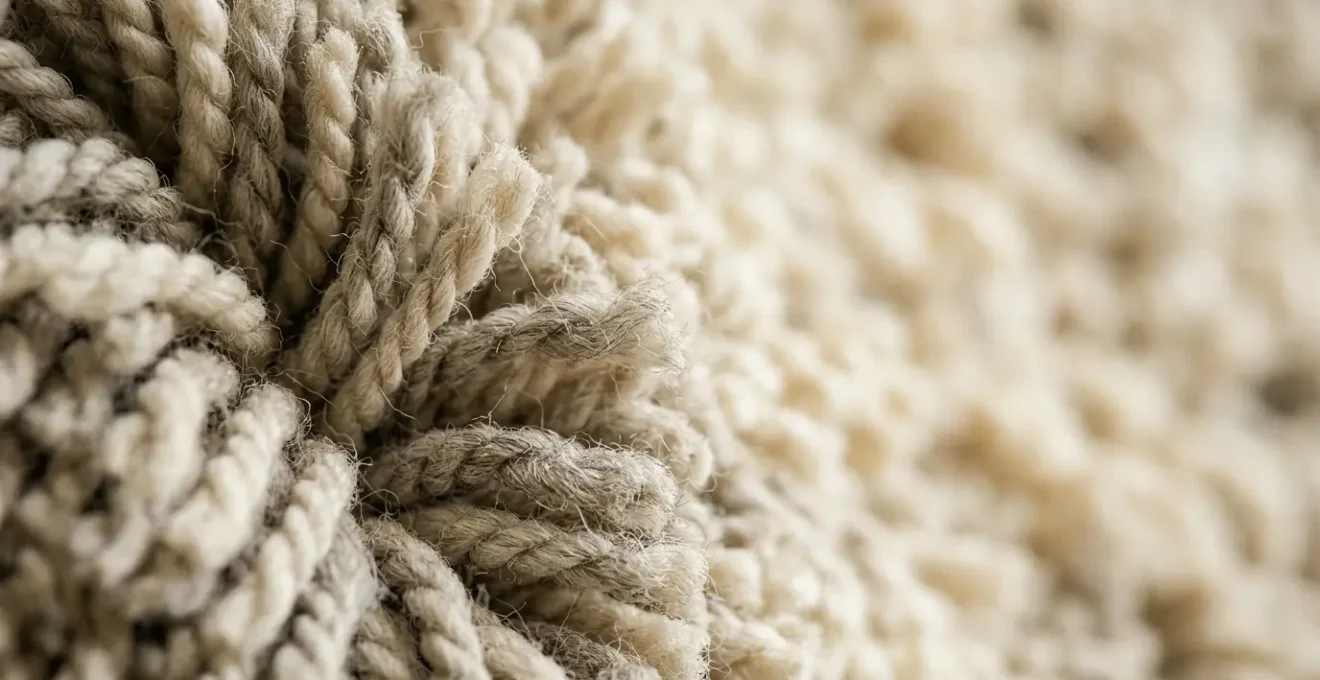
The plush comfort of a high-pile rug often comes with a hidden cost: a constant battle with allergens. The common approach of aggressive cleaning and powerful vacuums frequently damages the fibers, ironically worsening the problem. This guide reveals that the key is not brute force, but a precise, hygienic methodology that respects the rug’s structure. By understanding how to manage the ‘fiber ecosystem,’ you can dramatically reduce the allergen load and finally enjoy both the look and feel of your rug without compromise.
The appeal of a high-pile or shag rug is undeniable. It introduces a layer of luxurious texture, tactile comfort, and visual softness that few other decor elements can match. Yet for allergy sufferers, this same plushness can feel like a trap—a beautiful reservoir for dust, dander, and pollen that triggers endless sneezing and discomfort. The common advice often involves aggressive cleaning methods or simply giving up on the shaggy look altogether. This creates a frustrating dilemma: sacrifice style for health, or comfort for clean air?
But what if this is a false choice? The conventional wisdom about fighting rug allergens often overlooks a critical fact: the rug’s structure is not the enemy, but a complex ecosystem that can be managed. The problem isn’t the depth of the pile, but the methods we use to clean it. Brute force, harsh chemicals, and improper techniques can cause irreversible micro-damage to the fibers, creating an even more effective trap for future irritants. A healthy home is a precisely managed one, not a sterile one.
This guide offers a different perspective. We will explore how to work *with* your high-pile rug, not against it. By treating it as a passive air filter that requires specific, gentle maintenance, you can neutralize its potential as an allergen source. We will delve into the science of why certain cleaning methods fail, how to properly care for the fibers, and how the surrounding environment impacts the rug’s hygiene. It’s time to shift from a mindset of combat to one of strategic care, allowing you to breathe easy without sacrificing the style you love.
To achieve this balance, we will break down the essential strategies for maintaining a truly clean high-pile rug, from daily maintenance to long-term care. The following sections provide a comprehensive roadmap to mastering your rug’s unique fiber ecosystem.
Summary: A Hygienic Approach to Deep-Pile Rug Maintenance
- The Vacuuming Mistake That Ruins Shag Rugs in 6 Months
- How to Fluff Up High-Traffic Areas on a Plush Rug?
- Glass or Acrylic: Best Coffee Tables to Show Off a Plush Rug
- Why You Should Never Rub a Stain on a High-Pile Rug
- Does a Plush Rug Really Dampen Sound Better Than a Flatweave?
- Chunky Loop vs. Flatweave: Which Jute Style Lasts Longer in Hallways?
- Why Velvet Attracts Dust and How to Remove It Without Rubbing?
- Do Biodegradable Cleaners Really Disinfect Kitchen Counters Effectively?
The Vacuuming Mistake That Ruins Shag Rugs in 6 Months
The single most destructive action for a high-pile rug is improper vacuuming. Many owners assume that a powerful vacuum with a spinning beater bar is the best way to extract deep-down dirt. In reality, this approach is catastrophic for long fibers. A beater bar is designed to agitate short-pile carpets, but on a shag rug, it acts like a high-speed comb that yanks, tears, and shreds the individual yarns. This doesn’t just “clean” the rug; it permanently damages the fiber structure.
This aggressive action causes the yarns to untwist and fray. The result is a fuzzy, matted appearance and, more importantly from a health perspective, an exponential increase in surface area for allergens to cling to. Damaged fibers become like Velcro for dust and dander, making future cleaning less effective. The perceived deep clean is actually creating a more hospitable environment for the very particles you want to remove. Over a period of months, this method can visibly ruin the rug’s texture and destroy its luxurious feel.
The correct method focuses on pure suction without aggressive agitation. You should disengage the beater bar or use a vacuum that doesn’t have one. If your vacuum’s height is adjustable, set it to the highest pile setting. The goal is to lift debris from between the fibers, not to violently beat it out. For a truly thorough clean, it’s also beneficial to vacuum the back side of the rug a few times a year. This dislodges compacted dirt from the base of the weave, which can then be easily vacuumed from the front.
Adopting this suction-only approach preserves the integrity of the fibers, extends the life of your rug, and makes allergen removal far more efficient in the long run.
How to Fluff Up High-Traffic Areas on a Plush Rug?
Over time, even the most luxurious plush rug will show signs of wear in high-traffic areas. The fibers become compressed and matted, creating flat “pathways” that look worn and dirty. This isn’t just an aesthetic problem; it’s a hygienic one. Compressed fibers create a dense, non-porous layer where moisture can get trapped and airflow is eliminated. This creates an ideal microclimate for the proliferation of dust mites and mold, two of the most potent indoor allergens.
As the illustration above demonstrates, the difference between fluffed and matted fibers is structural. The matted section forms a tight thatch that prevents deep cleaning, while the fluffed section has open channels that allow air and vacuum suction to penetrate. According to American Lung Association recommendations, it’s crucial to keep home humidity below 50% to inhibit allergen growth, a goal that is undermined by the moisture-trapping nature of compressed fibers.
To revive these areas, you must reintroduce air and separation into the pile. One simple and effective method is using a carpet rake or a stiff-bristled brush (never metal). Gently rake the fibers in multiple directions against their natural lean. This action helps to break up the compacted mat and lift the individual yarns. For more stubborn cases, a small amount of moisture can help. Lightly mist the area with clean water from a spray bottle, let it sit for a few minutes to relax the fibers, and then rake them again. It is crucial to ensure the area dries completely to prevent mold growth.
Regularly fluffing these high-traffic zones not only restores the rug’s appearance but also disrupts the habitat for allergens, making your entire cleaning regimen more effective.
Glass or Acrylic: Best Coffee Tables to Show Off a Plush Rug
When you invest in a beautiful plush rug, the last thing you want is for your furniture to work against it—not just aesthetically, but hygienically. The choice of a coffee table can have a surprising impact on the allergen load in and around your rug. The primary factor at play is static electricity. Some materials are far more prone to generating a static charge than others, and this charge turns your furniture into a magnet for airborne dust, dander, and pollen.
Acrylic (or Lucite) tables, while visually light, are made from a synthetic polymer that readily generates static through friction with the air or cleaning cloths. As documented in textile industry research, this static can serve as a natural magnet, attracting and holding onto floating dust particles. This means an acrylic table will not only get dusty quickly itself, but it can also increase the concentration of allergens in the immediate vicinity of your rug, contributing to the overall particle load.
Glass, on the other hand, is an inert material with very low static generation. It does not attract dust through an electrical charge, making it a superior choice for an allergy-conscious home. A glass-topped coffee table with an open-leg design allows the rug’s texture to be fully appreciated while minimizing its role in allergen accumulation.
The following table breaks down the key differences for managing allergens:
| Property | Glass Tables | Acrylic Tables |
|---|---|---|
| Static Generation | Low to none (inert material) | High (synthetic material) |
| Dust Attraction | Minimal static-based attraction | Acts as dust magnet due to charge |
| Impact on Nearby Rug | Does not pull airborne allergens | May attract particles from air |
| Cleaning Frequency | Moderate (shows fingerprints) | High (static attracts particles) |
| Airflow Beneath | Good (typically has open leg design) | Good (typically has open leg design) |
| Allergen Management | Better for allergy sufferers | Requires anti-static treatment |
While both materials can look stunning, choosing glass over acrylic is a small but meaningful step toward reducing the overall allergen burden in your living space.
Why You Should Never Rub a Stain on a High-Pile Rug
When a spill happens on a plush rug, the instinctive reaction is to grab a cloth and rub vigorously. This is the single worst thing you can do. Rubbing a stain does not remove it; it grinds the liquid deeper into the pile and, more critically, causes permanent micro-damage to the rug’s fibers. This physical abrasion is the primary culprit behind a stain becoming a permanent fixture and a future allergen hotspot.
Case Study: Fiber Damage from Rubbing
Research on carpet fiber integrity demonstrates that aggressive agitation causes fibers to fray, fuzz, and pull apart at the microscopic level. When pressure is applied during rubbing, the twisted yarn structure unravels, creating thousands of micro-hooks that trap future debris. This process is irreversible and accelerates allergen accumulation by increasing the surface area available for particle adhesion.
Instead of rubbing, the correct technique relies on two principles: absorption and dilution, otherwise known as blotting. By blotting, you use capillary action to wick the spill upwards and out of the rug pile, rather than forcing it downwards. You work from the outside of the stain inward to prevent it from spreading. This gentle pressure removes the bulk of the liquid without abrading the delicate yarn structure. Once the excess is absorbed, you lightly mist the area with water and blot again, diluting the stain and lifting more of it with each pass.
Action Plan: The Blot and Dilute Method for Stain Removal
- Blot Immediately: Use a clean, dry, absorbent cloth to blot the spill. Apply gentle pressure, working from the outside of the stain toward the center. Never rub or scrub.
- Apply Moisture: Lightly mist the stained area with clean, cold water using a spray bottle. Do not over-saturate the area by pouring water directly onto the rug.
- Blot Again: Use a fresh, dry cloth to blot the dampened area. You should see the stain transferring from the rug to the cloth.
- Repeat Process: Continue the cycle of light misting and blotting with a clean section of the cloth until no more of the stain is transferring.
- Dry and Fluff: Allow the area to air dry completely. Once dry, use your fingers or a carpet rake to gently fluff the fibers back to their original position.
By resisting the urge to rub and embracing the blotting method, you not only stand a much better chance of removing the stain completely but also preserve the health and longevity of your rug’s fibers.
Does a Plush Rug Really Dampen Sound Better Than a Flatweave?
One of the celebrated benefits of a plush rug is its ability to absorb sound, creating a quieter and more serene environment. This is absolutely true and is a direct result of its structure. The dense, three-dimensional matrix of fibers in a high-pile rug is exceptionally effective at trapping and dissipating sound waves, a quality a thin flatweave rug cannot match. However, this same structure that makes it an acoustic champion is what gives it a bad reputation for allergies. But this reputation might be based on a misunderstanding.
While it’s true that deep piles can trap more allergens than a flat surface, they also play a role as a passive air filter. Instead of allowing dust and dander to remain airborne and be constantly recirculated with every footstep, the rug’s fibers pull these particles out of the air and hold them. Counter-intuitive research from Airmid Healthgroup found that allergen levels were lower in the air over carpets than over hard flooring, even after disturbances. The rug traps the particles, making them less available for us to inhale.
This transforms the problem. The goal is no longer to prevent trapping, but to efficiently *remove* what has been trapped. This is where proper, regular vacuuming (with suction only) becomes the critical maintenance step. The rug does its job of cleaning the air, and you do your job of cleaning the rug.
Effectively cleaned carpets have the capacity to trap allergen and microbial particles, making these particles less available to become airborne and thus maintaining indoor air quality.
– Dr. Bruce Mitchell, Airmid Healthgroup CEO and Allergy Physician
So, a plush rug does dampen sound far better than a flatweave, and its ability to trap allergens can be seen as a feature, not a bug—provided it is cleaned correctly and consistently.
Chunky Loop vs. Flatweave: Which Jute Style Lasts Longer in Hallways?
While this guide focuses on high-pile synthetic rugs, understanding the opposite end of the spectrum—natural, low-pile rugs like jute—provides crucial context. When comparing different rug types for allergy-friendliness, the primary factor is the physical space available for allergens to settle. This is where the difference between a chunky loop and a flatweave becomes stark, especially for high-traffic, high-particulate areas like hallways.
A flatweave rug, by its very nature, has a tightly woven, two-dimensional surface. It offers minimal nooks and crannies for dust, dander, and pollen to penetrate. As noted in allergen control research on rug construction, this structure allows each vacuuming session to be highly efficient, removing nearly all surface debris with ease. For hallways, this means dirt tracked in from outside has little opportunity to become embedded.
A chunky loop or shag rug, in contrast, is fundamentally three-dimensional. Its long, deep fibers create a vast, cavernous space for particles to fall into and accumulate over time. This structure is precisely what makes it a challenge for allergy sufferers, as explained by experts.
High pile and shag rugs, despite their luxurious feel, tend to be the least friendly to allergy sufferers. Their long fibers create deep pockets where dust, dander, and pollen settle and accumulate.
– Edward Martin Rug Design, Material Guide for Allergy Sufferers
This comparison isn’t to say high-pile rugs are inherently bad, but to highlight that they demand a more rigorous and specific cleaning protocol. A flatweave is forgiving; a shag rug is not. The easy-to-clean nature of a flatweave makes it a more durable and hygienically practical choice for a transitional space like a hallway, while the high-pile rug is better suited to lower-traffic areas where its allergen load can be more carefully managed.
Ultimately, the choice depends on balancing aesthetics with maintenance commitment. A flatweave offers low-maintenance durability, while a chunky pile offers superior comfort at the cost of requiring diligent cleaning.
Why Velvet Attracts Dust and How to Remove It Without Rubbing?
To understand the challenges of a shag rug, it’s helpful to look at a similar material on a smaller scale: velvet. Velvet upholstery, with its short, dense, and upright pile, acts as a perfect micro-model for the behavior of high-pile rug fibers. Like shag, velvet is notorious for being a “dust magnet,” and the reasons are directly related to both its structure and material composition.
The primary culprit is, once again, static electricity, especially in velvets made from synthetic fibers like polyester. These materials easily build up a static charge from friction, which then actively pulls airborne dust particles onto the surface. The dense pile then traps these particles, making them difficult to remove. This is the exact same mechanism at play with many modern shag rugs.
Furthermore, the way one cleans velvet provides a direct lesson for high-pile rugs. Rubbing a dusty velvet surface with a dry cloth is counterproductive. It grinds the particulate matter deeper into the base of the pile and can crush or distort the delicate fibers, creating a permanently “bruised” look.
Micro-Model: Velvet Pile Damage
Analysis of velvet pile behavior reveals that aggressive contact—whether from beater bars or rubbing—crushes the vertical pile structure and grinds particulate matter deeper into the base. This micro-scale phenomenon directly translates to shag and high-pile rugs where the effect is less immediately visible but creates permanent allergen reservoirs. The frayed micro-fibers resulting from crushing lose resilience and become exponentially more effective at trapping dust, dander, and pollen compared to intact, smooth fibers.
The correct method for cleaning both velvet and, by extension, a high-pile rug is to use a vacuum with a soft brush upholstery attachment. The gentle bristles dislodge surface dust, and the pure suction lifts it away without causing the abrasive damage of rubbing or a beater bar. This removes the “allergen load” without harming the fiber ecosystem.
By treating your plush rug with the same gentle care you would afford to delicate velvet, you preserve its structure and maintain its long-term hygiene.
Key Takeaways
- Improper vacuuming (using a beater bar) is the #1 cause of shag rug damage, creating more surface area for allergens.
- A high-pile rug acts as a passive air filter; the goal is to effectively remove trapped particles, not prevent trapping.
- Never rub a stain. Use the “Blot and Dilute” method to lift spills out via capillary action without damaging fibers.
Rethinking ‘Clean’: Why Disinfecting Your Rug Is a Misguided Goal
In the quest for a healthy home, there’s a common confusion between cleaning, sanitizing, and disinfecting. When it comes to a porous, deep-fibered surface like a shag rug, the goal of “disinfecting” is not only impossible but also misguided. Disinfectants are designed to kill microorganisms on non-porous surfaces like countertops. A rug’s structure is a deep, three-dimensional world where such chemicals can’t reach every surface, and allergens like pollen and dander aren’t alive to be killed in the first place.
The true objective for rug hygiene is allergen load reduction. This means physically removing as much of the particulate matter—dust, dander, pollen, and dust mite waste—as possible. The most effective way to do this is through a combination of regular, proper vacuuming and periodic professional deep cleaning. Research has shown that professional methods are exceptionally effective; for example, Airmid Healthgroup research demonstrated that hot water extraction delivered up to a 97% allergen reduction in carpets.
Furthermore, using household cleaners, even “biodegradable” or “natural” ones, can backfire. While excellent for hard surfaces, these products can leave behind a sticky or organic residue deep within the rug fibers if not perfectly rinsed out. This residue then becomes a food source for mold and bacteria, potentially creating a worse allergen problem than the one you were trying to solve. The focus should always be on extraction and removal, not on adding new substances into the rug’s delicate fiber ecosystem.
By shifting your focus from killing germs to physically removing particles, you adopt a far more effective and logical strategy for maintaining a healthy, low-allergen high-pile rug.
Frequently Asked Questions about High-Pile Rug Hygiene
What is the difference between cleaning and disinfecting a rug?
Cleaning removes dirt, dust, and allergens through physical extraction. Disinfecting kills microorganisms on non-porous surfaces. For porous rugs, the goal is allergen load reduction through removal, not sterilization, as true disinfection is impossible in deep fiber structures.
Can biodegradable cleaners leave residue in rug fibers?
Yes. While excellent for hard surfaces, organic and enzymatic compounds in biodegradable cleaners can leave residue deep in rug fibers. If not perfectly rinsed, this residue becomes a food source for mold and bacteria, potentially worsening the allergen problem rather than solving it.
Should I focus on killing or removing allergens from my rug?
Focus on removal. Allergens like pollen and dander are not alive—they cannot be killed. For dust mites, the priority is removing both the live mites and their waste products. Physical extraction through proper vacuuming and periodic professional cleaning is more effective than chemical treatments for managing rug allergens.