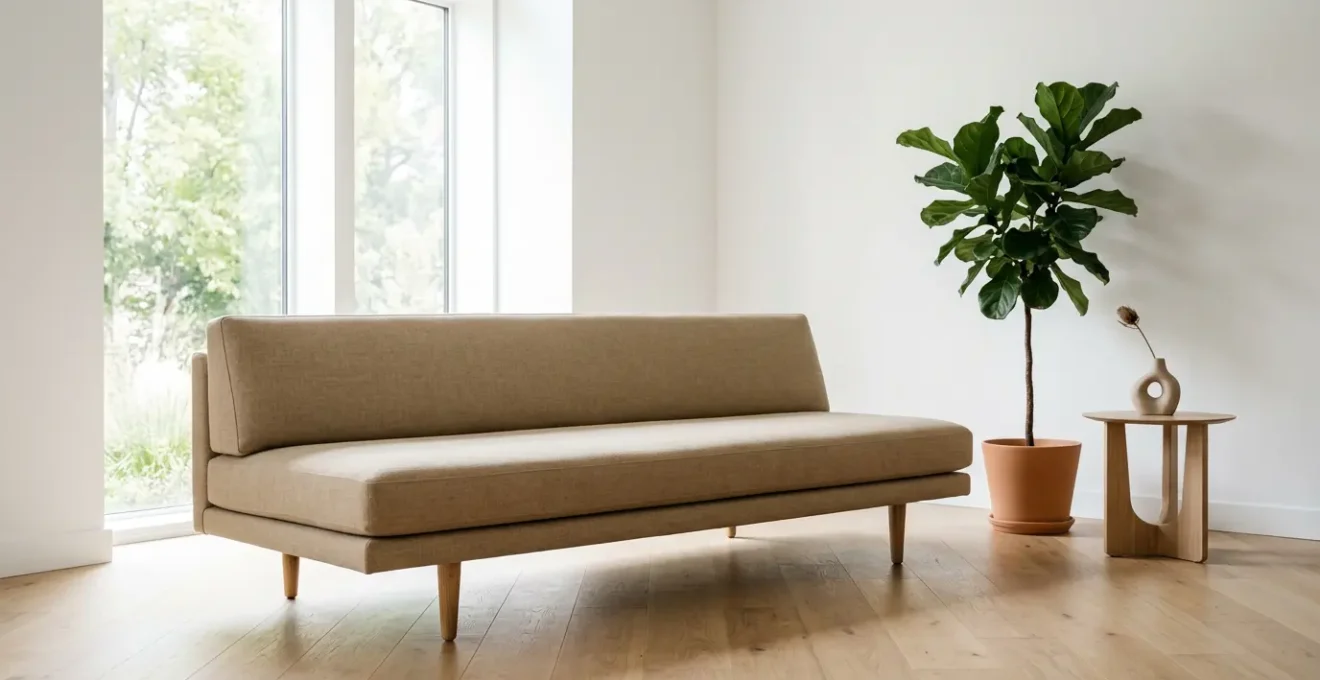
The secret to a comfortable low-profile sofa isn’t just its cushion density; it’s creating a complete ergonomic ecosystem around it.
- True comfort blends physical support (structural integrity) with psychological ease (visual space and cleanliness).
- Materials and styling choices are not just aesthetic; they directly impact your body’s posture and long-term well-being.
Recommendation: Shift your focus from buying a single piece of furniture to curating a system where the sofa, its placement, and its accessories work together to support your body and lifestyle.
For minimalist enthusiasts, the low-profile sofa is the epitome of clean lines and sophisticated design. Yet, a nagging fear often accompanies this aesthetic choice: will this beautiful, sleek piece of furniture be a source of back pain? The common advice to “check the seat depth” or “look for high-density foam” only scratches the surface. These are important factors, but they fail to address the complete picture of what makes a sofa truly, lastingly comfortable.
As an ergonomic furniture designer, I guide clients past this frustrating trade-off between style and well-being. The solution isn’t a secret spec or a magic material. It’s about a fundamental shift in perspective. A comfortable low-profile sofa is not an isolated object but the centerpiece of an ergonomic ecosystem. True, body-conscious comfort arises from the interplay between the sofa’s foundational structure, its materials, its adaptability, and the way it is styled within your space. It’s about how all these elements work in harmony to support your posture, reduce physical strain, and create a sense of psychological calm.
This guide will walk you through the critical questions that arise during the entire lifecycle of owning a low-profile sofa. We will deconstruct the components of this ecosystem, moving from structural decisions that create visual space to material choices that offer peace of mind, and finally, to styling strategies that transform your living room from a waiting area into a true sanctuary of comfort.
This article provides a comprehensive roadmap, answering the key questions you’ll face when integrating a low-profile sofa into your home. The following summary outlines the path we will take to build your perfect ergonomic ecosystem.
Contents: Unpacking the Elements of Sofa Comfort
- Why Raised Legs on a Sofa Make Your Living Room Look Bigger
- How to Keep a White Linen Sofa Clean With Kids in the House?
- Down vs. Foam: Which Sofa Filling Retains Its Sleek Shape Longer?
- The Styling Error That Makes Sleek Sofas Look Like Waiting Room Furniture
- How to Reconfigure a Modular Sofa for Movie Nights vs. Cocktail Parties?
- Leather or Performance Fabric: Which Is Better for Homes With Pets?
- How to Transition Your Sofa Pillows From Summer to Winter?
- How to Style a Bold Tribal Rug in a Modern Neutral Living Room?
Why Raised Legs on a Sofa Make Your Living Room Look Bigger
The quest for comfort begins not with cushions, but with space. A cluttered or cramped environment creates psychological stress, which directly translates to physical tension. Low-profile sofas with raised legs are a powerful tool for creating an illusion of spaciousness, a key component of what I call psychological comfort. When you can see the floor flowing underneath the sofa, the room feels lighter, more open, and less crowded. This visual continuity prevents the sofa from appearing like a heavy, immovable block, which can make a small room feel suffocating.
This isn’t just an aesthetic trick; it’s rooted in how our brains perceive volume. By lifting the bulk of the furniture off the floor, high legs allow light to travel further, illuminating more of the floor and making the entire room feel more expansive. As the Cozylant Furniture Design Team notes, this flow of light is what creates the “illusion of a larger space.” From an ergonomic design perspective, creating a visually comfortable environment is as important as the physical dimensions of the seat itself. In fact, standard sofa dimensions are already designed to accommodate 90% of the population, so achieving comfort often lies in these environmental and psychological details.
Choosing a sofa with visible legs—whether slender metal stilts or warm wooden posts—is a strategic first step. It establishes a foundation of openness, making your living area a more relaxing and inviting place to be before you even sit down. This feeling of calm is the first layer in our ergonomic ecosystem.
Ultimately, this visual breathing room sets the stage, ensuring the centerpiece of your living space contributes to a sense of calm rather than confinement.
How to Keep a White Linen Sofa Clean With Kids in the House?
The dream of a crisp, white linen sofa often clashes with the reality of daily life, especially in a home with children. The constant fear of spills and stains can erode the very comfort you seek, replacing relaxation with anxiety. This is where material science becomes a cornerstone of your ergonomic ecosystem. The peace of mind that comes from knowing your sofa can withstand real-world use is a profound form of comfort. Fortunately, you no longer have to choose between minimalist aesthetics and a stress-free environment, thanks to the advent of performance fabrics.
These engineered textiles are designed to look and feel like natural materials, such as linen or cotton, while offering incredible resistance to stains, moisture, and abrasion. Unlike temporary spray-on treatments, the protective qualities are woven directly into the fibers. This means spills from juice, markers, or muddy hands often bead up on the surface, allowing you to simply wipe them away before they can set. This durability isn’t just a marketing claim; it’s quantifiable. Industry standards measure fabric resilience in “double rubs,” and high-quality performance fabrics can withstand 50,000 or more double rubs, ensuring they hold up to the rigors of family life.
As the detailed image above shows, the tight weave and specialized fiber technology are what give these fabrics their protective qualities. By opting for a low-profile sofa upholstered in a high-performance white or light-colored fabric, you are making an active choice for psychological comfort. You can embrace the clean, bright aesthetic you love without the underlying stress of potential damage, allowing you and your family to truly live with and enjoy your furniture.
This choice allows you to maintain your minimalist style without sacrificing the relaxed, welcoming atmosphere essential for a comfortable home.
Down vs. Foam: Which Sofa Filling Retains Its Sleek Shape Longer?
A low-profile sofa’s sharp, clean lines are central to its appeal. But that aesthetic is worthless if the cushions sag, lump, or flatten within a year, destroying both the look and the ergonomic support. The choice of filling material is therefore critical to the sofa’s long-term structural integrity. While down-filled cushions offer an initial “sinking-in” luxury, they require constant fluffing to maintain their shape and can compress over time, failing to provide consistent support for your back and posture. For a sleek design, this is an aesthetic and ergonomic deal-breaker.
For retaining a crisp shape and providing reliable support, high-density (HD) foam is unequivocally superior. Unlike down, foam has a cellular structure that actively resists compression and bounces back to its original form. This ensures the clean lines of your sofa remain intact and that the support you feel on day one is the same you feel for years to come. Longevity studies on cushion materials show that high-quality foams, particularly those with a density rating of 2.5 lbs/ft³ or higher, can maintain their shape and support for 10 years or more. This durability is the bedrock of lasting physical comfort.
However, not all foams are created equal. Density (measured in lbs/ft³) indicates durability, while the ILD (Indentation Load Deflection) rating indicates firmness. Finding the right balance is key to creating a sofa that is both supportive and comfortable, not hard as a rock. The following table breaks down these ratings to help you make an informed choice, based on data from an analysis of foam specifications.
| Foam Density (lbs/ft³) | ILD Rating | Recommended Use | Expected Lifespan |
|---|---|---|---|
| 1.5 – 2.5 | 15 – 25 | Occasional seating | 3-5 years |
| 2.5 – 3.5 | 25 – 35 | Daily use residential sofas | 5-10 years |
| 3.5 – 5.0 | 35 – 45 | Heavy use / commercial | 10-13+ years |
By selecting a sofa with the appropriate HD foam core, you invest in the sofa’s structural and ergonomic future, ensuring it remains as comfortable and stylish as the day you bought it.
This commitment to internal quality ensures your minimalist sofa is a source of reliable physical support, not a recurring disappointment.
The Styling Error That Makes Sleek Sofas Look Like Waiting Room Furniture
You’ve chosen the perfect low-profile sofa with great structural integrity and beautiful fabric. Yet, it can still feel cold, uninviting, and sterile—like furniture in a corporate waiting room. The most common styling error is treating the sofa as a standalone object instead of the anchor of a complete comfort ecosystem. A sleek sofa in an empty space lacks the crucial layers that signal to our bodies and minds that it’s a place for relaxation. Without these cues, the environment feels formal and temporary, and we instinctively hold ourselves more rigidly.
To avoid this, you must consciously build a “nest” of comfort around your sofa. This involves adding functional and sensory elements that make the space feel personal, warm, and convenient. It’s about ensuring that everything you need to relax is within easy reach, so you don’t have to strain or perch awkwardly. This includes accessible surfaces for a drink or a book, soft textures to engage the sense of touch, and warm lighting to counteract harsh overhead fixtures. These elements work together to create an undeniable atmosphere of repose.
Building this ecosystem doesn’t require clutter. It requires strategic layering. By thoughtfully adding these elements, you transform the sofa from a mere object into the heart of a functional and deeply comfortable living zone.
Action Plan: Building Your Comfort Ecosystem
- Place accessible surfaces: Position C-tables, ottomans, or a low coffee table within arm’s reach to avoid leaning or straining.
- Layer lighting sources: Add warm, low-level floor lamps and table lamps to create a soft, inviting glow and avoid stark overhead lighting.
- Introduce personal textures: Mix and layer a chunky knit throw with velvet pillows and perhaps a leather lumbar cushion to add visual warmth and tactile variety.
- Ensure proper viewing angles: Position the sofa at a comfortable distance from the TV or focal point to maintain a natural, relaxed posture.
- Define the zone with a rug: Place a soft area rug partially under the sofa to visually anchor the space and create a distinct boundary for your comfort zone.
This list, inspired by ergonomic testing principles detailed in resources like Dweva’s guide on sofa ergonomics, provides a blueprint for turning a stark seating area into a welcoming sanctuary.
Each layer you add is a signal to your body to let go of tension and truly settle in, proving that thoughtful styling is a functional component of ergonomic design.
How to Reconfigure a Modular Sofa for Movie Nights vs. Cocktail Parties?
True comfort is not static; it adapts to your life’s changing needs. A low-profile sofa must support various activities and postures, from intimate lounging to formal entertaining. This is where postural versatility becomes paramount, and no design embodies this principle better than a modular sofa. A modular system allows you to physically reconfigure your seating to perfectly match the ergonomic and social demands of the moment, a key reason that 65% of furniture buyers now prioritize such multifunctional pieces.
The beauty of a modular sofa lies in its ability to transform. For a cozy movie night, you can connect all the pieces to create a deep, expansive lounge pit, complete with an ottoman as a chaise. This encourages a relaxed, reclined posture perfect for long-term comfort. For a cocktail party, you can break the sofa apart into smaller, distinct seating areas. Spacing two sections opposite each other with a coffee table in between fosters conversation, encouraging a more upright, engaged posture suitable for social interaction. This adaptability ensures your sofa is always working for you, rather than forcing you into a single, restrictive position.
The success of this versatility hinges on the quality of the engineering. High-quality modular sofas use robust, easy-to-use connector mechanisms, like the one detailed above. These systems ensure that the pieces lock together securely, preventing any shifting or gapping that could compromise comfort and stability. When choosing a modular piece, pay close attention to these connectors. They are the hidden engine of the sofa’s adaptability, allowing you to effortlessly shift between different ergonomic setups and ensuring your investment serves every facet of your life.
By choosing a well-designed modular system, you are not just buying a sofa; you are investing in a dynamic seating solution that promotes healthy posture across a full spectrum of activities.
Leather or Performance Fabric: Which Is Better for Homes With Pets?
The presence of pets introduces another critical variable into our comfort ecosystem: hygiene and durability. A sofa that is constantly covered in fur, susceptible to odors, or easily damaged by claws creates a source of chronic stress, undermining any sense of relaxation. When it comes to pet-friendly homes, the choice between leather and performance fabric is a crucial one, with each offering a distinct set of benefits for maintaining a clean, calm, and comfortable environment.
Finished leather is an excellent choice for its non-porous surface. As the Furniture Industry Research Association highlights, this quality is key for homes with pets.
Non-porous materials like finished leather don’t absorb pet dander and odors, which can be simply wiped away.
– Furniture Industry Research Association, Performance Fabrics: Expectations vs. Reality
This makes cleanup incredibly simple and helps maintain better air quality. However, leather is susceptible to scratches, so it’s best for homes with pets who are not prone to scratching furniture. On the other hand, performance fabrics offer superior resistance to claws. Their tight weave is difficult for claws to snag, preventing the pulling and tearing common with standard upholstery.
Case Study: Fabric Durability in High-Traffic Environments
To understand the real-world difference, consider this analysis. In a high-traffic scenario with over 80 daily users, a standard commercial fabric (rated at 30,000 Martindale cycles) showed visible degradation at just 2.5 years. In contrast, a premium performance fabric (rated at 100,000 cycles) maintained its structural and aesthetic integrity throughout the entire 5-year test cycle. While the study noted that the sofa’s frame quality is the primary determinant of its overall lifespan, the fabric choice was the single biggest factor in its aesthetic longevity and maintenance costs. This demonstrates that investing in a superior material directly translates to a longer-lasting, more stress-free ownership experience.
The right choice depends on your pet’s behavior. For shedders and pets with dander, the easy-to-clean surface of leather is ideal. For pets with active claws, the durable, snag-resistant weave of a performance fabric is the safer bet. In either case, making a conscious material choice is vital for the long-term comfort of your entire household.
By selecting a material that aligns with your lifestyle, you ensure your sofa remains a source of relaxation, not a constant cleaning chore.
How to Transition Your Sofa Pillows From Summer to Winter?
Pillows are not mere decoration; they are the most adaptable ergonomic tool in your comfort arsenal. For a low-profile sofa, which can sometimes lack a high back for upper-body support, pillows are essential for customizing comfort. More importantly, our comfort needs change with the seasons. A seasonal pillow strategy allows you to adjust your sofa’s support profile, texture, and feel to match, ensuring optimal comfort year-round.
In the winter, we naturally seek a cozier, more enveloping feel. This is the time to use larger, denser pillows. Think oversized velvet or wool cushions filled with feather-down. These can be “karate-chopped” to create a deep, supportive pocket for your lower back, and their sheer volume effectively reduces the seat depth, creating a more nested-in posture. In contrast, summer calls for a lighter, airier feel. This is when you should switch to fewer, smaller pillows made from crisp linen or cotton with perkier foam inserts. This approach maximizes the sofa’s sleek lines, promotes airflow, and provides firm but minimal support, preventing you from feeling “stuck” to the sofa in warmer weather.
This strategy also allows you to address a common question: what is the ideal seat depth? The answer is, it depends. A deeper seat (23-25 inches) is great for lounging and pairs well with larger pillows that can bridge the gap behind your back. A standard depth (20-22 inches) benefits from more targeted lumbar support from smaller pillows. Here is a simple seasonal transition plan:
- Winter Setup: Use larger (22-24 inch), denser feather-down pillows in rich, warm textures like velvet, wool, or chunky knits. This creates a cozy, enveloping feel.
- Summer Setup: Switch to smaller (18-20 inch), perkier foam- or poly-filled pillows in breathable fabrics like linen or cotton to maintain a cool, sleek profile.
- Textural Transition: The shift from smooth cotton to plush faux fur is a sensory cue that signals a change in season, enhancing psychological comfort.
- Ergonomic Adjustment: Use heavy, moldable down inserts for winter luxury and firm foam inserts for active summer support.
By treating your pillows as a dynamic system, you ensure your low-profile sofa provides tailored ergonomic support that adapts perfectly to your body’s needs throughout the year.
This simple practice transforms a static piece of furniture into a responsive and perpetually comfortable seating experience.
Key Takeaways
- Comfort is a System, Not a Feature: True comfort comes from a holistic “ergonomic ecosystem” that includes visual space, material science, and functional styling, not just from cushion specs.
- Look Beyond the Surface: The unseen elements—like foam density, connector quality, and fabric durability ratings—are what guarantee long-term structural integrity and support.
- Styling is Functional: Accessories like pillows, throws, and rugs are not just decorative. They are essential tools for adjusting ergonomic support, providing sensory comfort, and defining a psychological “comfort zone.”
How to Style a Bold Tribal Rug in a Modern Neutral Living Room?
The final piece of our ergonomic ecosystem is grounding the space. A bold rug, particularly a textural tribal design, does more than just add color; it defines the “comfort zone,” anchoring your low-profile sofa and visually unifying all the surrounding elements. However, integrating a powerful pattern into a serene, modern neutral room can feel intimidating. The key is to treat the rug not as a competitor to the sofa, but as its foundation. The goal is connection, not competition.
First, ensure the rug is large enough. It should extend at least six inches beyond the sides of the sofa and be positioned so that at least the front legs of the sofa are sitting on it. This physically and visually connects the pieces, preventing the rug from looking like a disconnected “island” in the middle of the room. Second, create a color bridge. A bold tribal rug will have multiple colors. Identify one or two of the rug’s secondary, less dominant colors and echo them in the sofa’s throw pillows or a nearby art piece. This creates a subtle, sophisticated thread of continuity that makes the pairing feel intentional and harmonious, rather than chaotic.
As seen in the image above, the indigo from the rug is subtly picked up by a single accent pillow, creating a cohesive visual story. The rug’s bold pattern provides sensory richness and warmth, balancing the sleek minimalism of the low-profile sofa. This contrast is what brings the room to life. The plush texture of the rug provides a soft surface underfoot, a final sensory input that signals relaxation to the body. It completes the nest you began building, creating a space that is not only visually stunning but deeply and instinctively comfortable.
Your journey to a comfortable and stylish minimalist home is now complete. Begin today by assessing your own space and applying these principles to build an ergonomic ecosystem that supports your body and delights your senses.