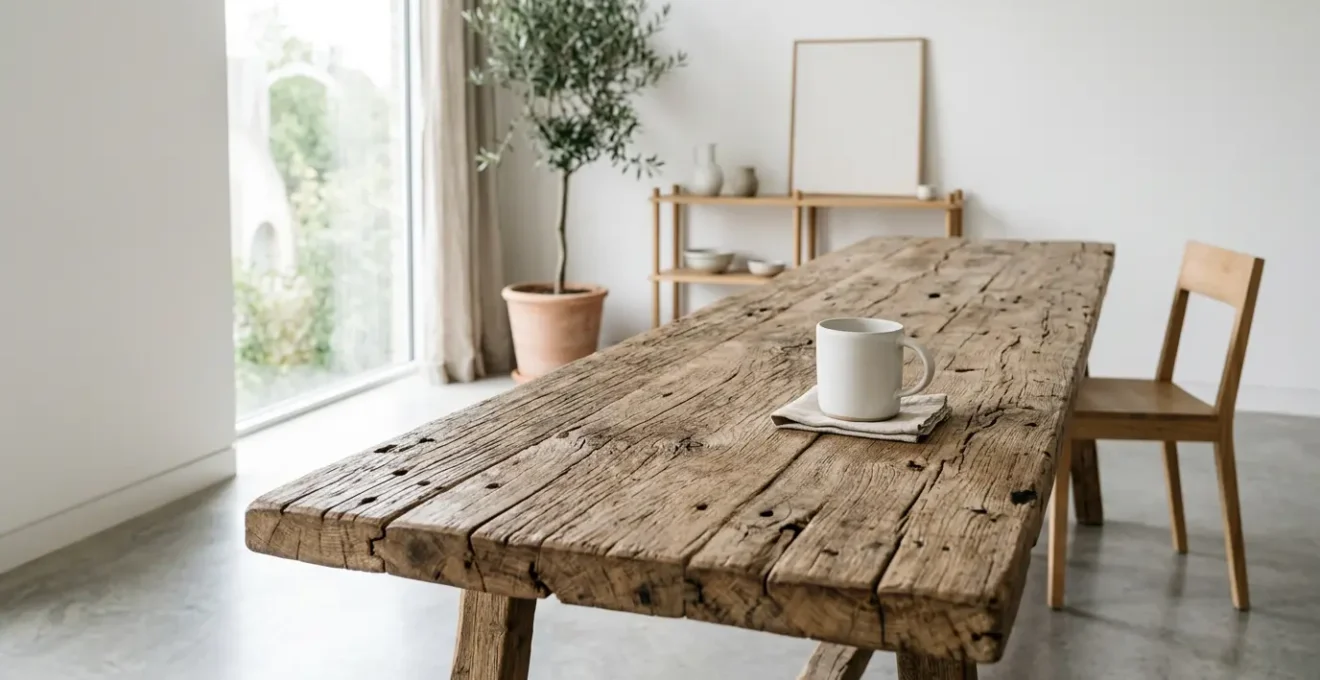
Protecting a reclaimed wood table from family life isn’t about choosing the strongest surface sealant, but about a holistic approach that preserves its history while making it resilient from within.
- Verify the wood’s authenticity and inspect for hidden threats like dormant pests before applying any finish.
- Use a penetrating oil finish, not just a surface-level coat, for deep protection against both spills and structural warping.
Recommendation: The best defense is a proactive one. Understand your table’s unique story to give it a durable future ready for everyday use.
Bringing a reclaimed wood table into your home is about more than just furniture; it’s about anchoring your dining space with a piece of history. Each knot, nail hole, and saw mark tells a story. For a family, however, that beautiful rustic surface can also be a source of anxiety. The fear of the first grape juice spill, a water ring from a forgotten glass, or a scratch from a toy can overshadow the joy of owning such a unique piece. Many guides will offer simple advice: use coasters, wipe up spills, and apply a thick coat of polyurethane. But this approach often fails to address the unique nature of reclaimed wood.
The common solutions treat the table like any other piece of new furniture, aiming to create an impenetrable plastic shell. This not only can make the wood look artificial, but it also ignores the wood’s past—a history that includes exposure to elements, potential insect activity, and inherent structural quirks. The true key to making a reclaimed wood table family-proof isn’t to suffocate it under a thick, glossy finish. It’s to understand its specific vulnerabilities and protect it from the inside out, creating a resilient shield that honors, rather than hides, its character.
This guide provides a complete system for protecting your investment. We will walk through the essential steps, from verifying you have authentic material to choosing a finish that offers deep, lasting protection. By following this holistic approach, you can confidently let your family live around your table, knowing its story and beauty are safeguarded for years to come.
To help you navigate this process, we’ve broken it down into a clear, step-by-step guide. Below is a summary of the topics we will cover to transform your reclaimed wood table into a durable, worry-free centerpiece of your home.
Summary: Protecting Your Reclaimed Wood Table
- Is It Really Reclaimed? How to Spot Fake Distressed Wood
- How to Sand a Rustic Table Without Losing Its Character?
- Metal or Upholstered: Which Chairs Contrast Best With Heavy Timber?
- The Wobble Fix: How to Level a Warped Reclaimed Table on Hardwood Floors?
- How to Ensure Your Barn Wood Table Doesn’t Have Dormant Beetles?
- The Environmental Impact of Buying Antiques vs. New “Green” Furniture
- How to Make Grey Composite Decking Look Natural?
- How to Style Rattan Furniture Indoors Without It Looking Like a Patio?
Is It Really Reclaimed? How to Spot Fake Distressed Wood
Before you can protect your table, you must be certain of what you’re protecting. The term “reclaimed” has become a marketing buzzword, and many new, artificially distressed pieces are sold as the real thing. True reclaimed wood has a story earned over decades, not one carved by a machine last week. As one forest products industry expert clarifies, the distinction is crucial. In a Quora discussion, they noted: “reclaimed wood means it had a prior use whereas rustic means it is not clear/clean by the definitions of traditional lumber grading.”
This concept of material honesty is your first line of defense. Fake distressing often appears random and illogical—dents and dings in places that wouldn’t normally see wear. Authentic aging, however, leaves a logical trail. Look for a smooth, silky feel in areas where hands would have rested or objects would have repeatedly rubbed. An authentic piece tells its story through these wear patterns. Furthermore, real wood has a grain. As Vintage Mill Werks points out, “If you have a piece of ‘wooden’ furniture that doesn’t have grains at all, it’s most likely made of laminate.”
Case Study: Material Honesty in Wood Finishing
Experts emphasize that authentic reclaimed wood has imperfections earned over decades. Its story is told through logical wear patterns—smooth and silky to the touch where human hands have been. In contrast, faux distressing is often illogical, with dents in places that wouldn’t naturally get damaged. This principle also applies to the finish. A thick, glossy, or uniformly colored finish can make even historic wood look plastic and fake, destroying its inherent value and story.
To spot a fake, pay close attention to the details. Nail holes in genuine reclaimed wood show variance in size and shape, often with rust staining around them from the old nail. Mass-produced fakes will have uniform holes. Similarly, check for saw marks on unfinished surfaces like the underside of the table. Old, water-powered mills left straight saw marks, while circular marks indicate processing after the mid-1800s. These details are the wood’s birth certificate.
How to Sand a Rustic Table Without Losing Its Character?
Once you’ve confirmed your table is authentic, the next step is preparation. For families worried about splinters and hygiene, sanding seems like a necessary evil. The fear is that sanding will erase the very character you bought the table for—the saw marks, the gentle undulations, the rich patina. The goal is not to create a perfectly flat, new-looking surface. Instead, you should practice character-conscious sanding: preparing the wood to accept a protective finish while preserving its history.
The key is to sand by hand or with an orbital sander using a light touch. Start with a medium-grit sandpaper (around 120-grit) and focus only on the high spots and areas that feel rough or splintery. Your aim is to smooth the surface just enough for practical use, not to flatten it completely. Avoid the temptation to dig into the wood’s natural valleys or to remove deep-set marks. These “flaws” are the soul of the piece. After the initial pass, finish with a fine-grit sandpaper (220-grit) to create a surface that is smooth to the touch but still visually textured.
This delicate balance is what makes the final piece so compelling. As the design blog Little House of Four notes when discussing sanding for a raw wood look, “The contrast adds depth, dimension, and character, especially for vintage and antique furniture.” By sanding selectively, you enhance this contrast, making the smooth areas pleasant to touch while the historic marks remain visible testaments to the wood’s past. You are curating the surface, not erasing it.
This process ensures the table is safe and practical for children, without sacrificing its aesthetic integrity. The resulting surface will be ready to absorb a protective finish evenly, which is the crucial next step in making it resilient to daily life.
Metal or Upholstered: Which Chairs Contrast Best With Heavy Timber?
Protecting your table extends beyond its surface; it includes creating a functional and cohesive dining space around it. The chairs you pair with your reclaimed wood table play a significant role in its overall look and usability, especially in a family home. A heavy timber table has immense visual weight and history. The right chairs can balance this, while the wrong ones can make the entire setup feel clunky or thematically overwrought.
The key principle is contrast. Pairing a rustic table with equally rustic wooden chairs can create a monotonous, “log cabin” effect. Instead, create visual interest by choosing chairs made from different materials. Metal chairs, especially those with slender frames like Tolix-style or minimalist wire-frame designs, offer a fantastic industrial or modern contrast. They lighten the look of the heavy timber and their durability is a major plus for a home with children. They are easy to wipe down and incredibly resilient.
Upholstered chairs offer a different kind of contrast—one of texture and comfort. Pairing the hard, historic wood with soft, cushioned seating creates an inviting and comfortable dining experience. This is ideal for encouraging long family dinners and gatherings. Opt for durable, stain-resistant fabrics in neutral or complementary colors to balance practicality with style. The softness of the upholstery provides a welcome counterpoint to the ruggedness of the wood.
Ultimately, the best choice depends on the aesthetic you want to achieve. Metal enhances a modern farmhouse or industrial vibe, emphasizing the table’s rustic origins. Upholstery leans into a more comfortable, transitional, or sophisticated look. Either way, the contrast in material will make your reclaimed wood table the undisputed star of the room.
The Wobble Fix: How to Level a Warped Reclaimed Table on Hardwood Floors?
One of the most common—and frustrating—issues with reclaimed wood tables is instability. Because the wood has lived a long life and been exposed to varying humidity levels, it can have a natural warp or twist, leading to a dreaded wobble. While shimming a leg with a folded piece of cardboard is a temporary fix, the real solution lies in a principle we’ll call structural stability. True protection involves addressing the wood’s inherent tendency to move, and this is directly linked to the finish you choose.
While leveling feet can be installed, a far more elegant and holistic solution starts with the finish itself. A proper finish does more than just protect against stains; it helps stabilize the wood. As restoration experts from Smithers of Stamford explain, “A proper finish helps stabilize the wood by slowing moisture exchange, thus reducing the potential for future warping and movement.” This is the secret to long-term stability. By sealing all surfaces of the wood—including the underside and legs—you create a balanced piece that is less susceptible to changes in your home’s humidity.
Case Study: Refinished Table Surface Durability
In a project documented by Thrifty Decor Chick, a DIY enthusiast tackled a water-stained wood dining table that had almost no protective coat. After years of family use, it was covered in stains. The table was sanded down and treated with multiple coats of Tung oil. This created a water-resistant, satin finish that not only prevented moisture from penetrating but also enhanced the wood’s tone and variations. Most importantly, the finish stabilized the wood by slowing moisture exchange, reducing the potential for future warping and movement that cause wobbles.
For this purpose, penetrating finishes like Tung oil or other hardwax oils are superior to surface-level coats like polyurethane. These oils soak into the wood fibers, hardening from within to create a deep, resilient, and water-resistant shield. This “deep shielding” not only repels spills effectively but also provides the moisture regulation needed to prevent future warping. For a family table, this is the ultimate two-for-one solution: robust protection against stains and a long-term fix for instability.
How to Ensure Your Barn Wood Table Doesn’t Have Dormant Beetles?
The rustic nail holes and tiny tunnels in barn wood are part of its charm, but they can also hide an unwelcome guest: wood-boring beetles. The thought of insects emerging from your dining table is unsettling, to say the least. Wood infestation specialists warn, “Beetle eggs may live inside the wood for years before hatching if left unnoticed.” Therefore, a crucial part of protecting your table is a proactive inspection for any signs of pest activity before you even think about sealing it.
The key is to distinguish between old, inactive damage and a live infestation. The tell-tale sign is a fine, powdery dust called “frass” near the holes. If you see frass, you need to identify its nature. White, non-clumpy powder indicates an active infestation, meaning larvae may still be inside the wood. Yellow, clumpy powder is typically a sign of an old infestation where the beetles have long since departed. Character holes from an old infestation are part of the wood’s story; a new infestation is a threat that must be neutralized.
If you suspect an active infestation, the wood must be treated. Professional kiln-drying is the most effective method, as pest control experts state that heating the wood to a core temperature of 132-140°F for 30 minutes to an hour will kill all life stages of the beetles. For DIY treatment, borate-based products can be applied to unfinished wood, which will kill larvae as they chew. Crucially, any pest treatment must happen *before* you apply a sealer, as the sealer will prevent the treatment from penetrating the wood.
Your Action Plan: Checking for Beetle Infestation
- Inspect for Frass: Check for white, non-clumpy powder on or near the wood—this indicates a potentially active infestation.
- Identify Old Infestations: Look for yellow, clumpy powder. This is a sign of an old infestation, and the beetles have likely already left.
- Distinguish Hole Types: Learn to tell the difference between historic, empty beetle galleries (character) and fresh holes with frass (active threat).
- Treat If Active: If the infestation is active, treat the unfinished wood with a borate-based product to kill any remaining larvae.
- Timing is Everything: Remember that any pest treatment must occur before sealing the wood, as the finish will block the treatment’s effectiveness.
The Environmental Impact of Buying Antiques vs. New “Green” Furniture
Choosing a reclaimed wood table isn’t just an aesthetic decision; it’s a powerful environmental statement. In an age of fast furniture and disposable goods, opting for an antique or reclaimed piece is one of the most sustainable choices you can make for your home. Understanding this impact reinforces the value of the object you are working so hard to protect. As Tatler Asia aptly puts it, “Antiques represent the pinnacle of sustainable decor by eliminating the considerable environmental impact tied to manufacturing brand-new items.”
The numbers are staggering. Manufacturing, processing, and shipping new furniture carries a significant carbon cost. By contrast, research from the UK found a 16 times lower carbon footprint for antiques compared to their newly made counterparts. By choosing a piece that already exists, you are sidestepping the entire carbon-intensive production chain, from felling new trees to factory emissions and international shipping.
Furthermore, you are actively participating in the circular economy and diverting waste from landfills. The scale of furniture waste is enormous. According to the US Environmental Protection Agency, Americans discarded more than 12 million tons of furniture in 2018 alone, with the vast majority ending up in landfills. Each reclaimed table represents a significant object that has been saved from this fate, its life and usefulness extended for another generation.
So, as you carefully sand, seal, and protect your table from the rigors of family life, remember that your efforts go beyond your own home. You are acting as a custodian of a beautiful, historic object and making a meaningful choice for the planet. This perspective elevates the task of protection from a simple chore to a worthwhile act of preservation.
Key Takeaways
- True protection for reclaimed wood is a holistic system, starting with verifying authenticity and checking for pests before any finish is applied.
- A penetrating oil finish (like Tung oil) is superior for family tables, as it provides deep protection against spills and enhances structural stability to prevent warping.
- The goal is to preserve the wood’s character, not erase it. Use “character-conscious” sanding and avoid thick, plastic-like finishes that create a fake look.
How to Make Grey Composite Decking Look Natural?
This question seems out of place, but it holds a critical lesson for protecting reclaimed wood: the danger of making a natural material look fake. The biggest mistake you can make after sourcing a beautiful, authentic piece of reclaimed wood is to apply a finish that makes it look like plastic composite. This is a common pitfall for those seeking maximum durability, especially with children in the house.
Many people reach for heavy-bodied, film-forming finishes like polyurethane or varnish, believing a thick, glossy coat is the best defense against spills and scratches. While these finishes do create a hard surface shell, they do so at a great cost. They sit on top of the wood, filling in every crack and crevice, obscuring the subtle texture and depth of the grain. The result is often a uniform, plasticky sheen that robs the reclaimed wood of its soul. It loses its material honesty and starts to look like the very thing it is not: a mass-produced, artificial product.
This is where the wisdom of penetrating finishes comes into play. A hardwax oil or Tung oil works with the wood, not against it. It soaks into the fibers and hardens from within, preserving the natural feel and matte-to-satin luster of the timber. It allows the wood’s texture—the saw marks, the grain, the slight imperfections—to remain a tactile part of the experience. It protects the wood while respecting its nature.
So, the answer to making your table not look like grey composite decking is to reject the “plastic shell” approach. Embrace a finish that celebrates the wood’s authenticity. This method provides robust, family-friendly protection without sacrificing the very character that made you fall in love with the piece in the first place.
How to Style Rattan Furniture Indoors Without It Looking Like a Patio?
Just as an improper finish can make wood look fake, improper styling can make it feel out of place. This question about rattan holds a parallel truth for your reclaimed wood table. Both materials often have “outdoor” origins—rattan from a patio, barn wood from a field. The art of bringing them indoors successfully lies in sophisticated layering and textural balance.
A reclaimed wood table is a statement of rustic, often industrial, history. To make it feel like a polished part of an interior, you need to surround it with contrasting textures that add warmth and refinement. This is where materials like rattan, upholstery, soft textiles, and reflective metals come in. They create a dialogue with the wood, preventing it from overwhelming the space with a single, rustic note.
Think about the layers. Place a soft, low-pile wool rug beneath the table to define the dining area and add warmth underfoot. Use upholstered or delicate rattan chairs to contrast with the heavy timber. On the table itself, use linen placemats or a soft-spun cotton runner to introduce another layer of texture. These elements soften the wood’s ruggedness and signal that this piece, despite its humble origins, now belongs to a comfortable, curated indoor environment.
This act of balancing textures is the final step in protecting and integrating your table. You’ve verified its authenticity, prepped its surface, shielded it from within, and ensured its structural integrity. Now, by styling it with intention, you complete its transformation from a piece of salvaged material into the warm, inviting heart of your family’s home.
By embracing this holistic system—from authentication and pest control to finishing and styling—you transform the task of protection into an act of preservation. Your reclaimed wood table becomes more than just a surface for meals; it becomes a durable, worry-free, and cherished piece of your family’s story, ready to withstand the spills and joys of daily life for years to come.