Smart Home & Innovations
The way we interact with our living spaces has fundamentally changed. Smart home technology has evolved from a futuristic concept into an accessible reality that seamlessly blends functionality with aesthetic appeal. For those passionate about interior design, these innovations offer unprecedented opportunities to create environments that respond to our needs, adapt to our routines, and elevate the overall living experience without compromising visual harmony.
Understanding smart home technology can feel overwhelming with the constant stream of new devices and platforms. This resource breaks down the essential categories, explains how these innovations integrate with thoughtful interior design, and provides practical insights to help you make informed decisions. Whether you’re considering your first smart device or planning a comprehensive home transformation, the key is knowing which technologies genuinely enhance your daily life while complementing your decorative vision.
What Makes a Home Truly “Smart”?
At its core, a smart home uses connected devices and automation to perform tasks that traditionally required manual intervention. Think of it as giving your home a nervous system—sensors detect changes in the environment, while actuators respond accordingly, all coordinated through a central intelligence.
The distinction between a house with gadgets and a truly smart home lies in integration. Individual devices offer convenience, but interconnected systems create genuine intelligence. When your lighting automatically adjusts based on natural light levels, your thermostat learns your schedule to optimize comfort and energy use, and your security system communicates with door locks and cameras, you’ve created an ecosystem rather than a collection of isolated tools.
Modern smart homes typically operate through three layers: sensing (detecting motion, temperature, light levels), processing (analyzing data and making decisions), and acting (adjusting settings or triggering responses). This architecture allows your home to anticipate needs rather than simply respond to commands, fundamentally changing the relationship between inhabitants and their environment.
Essential Smart Home Categories for Modern Living
Smart technology spans numerous applications, but certain categories have proven particularly transformative for both functionality and interior aesthetics. Understanding these core systems helps you prioritize investments and create a cohesive smart home strategy aligned with your decorative goals.
Intelligent Lighting Systems
Lighting represents the most accessible entry point into smart home technology and offers immediate visual impact. Smart bulbs and fixtures provide control over brightness, color temperature, and hue through smartphone apps or voice commands, enabling you to craft the perfect ambiance for any occasion.
Beyond basic dimming, advanced systems create lighting scenes that transform spaces throughout the day. Morning routines might feature energizing cool tones that gradually increase in intensity, while evening settings shift to warm, relaxing hues. Circadian lighting systems even mimic natural daylight patterns to support healthier sleep cycles. For design enthusiasts, this technology eliminates the need for multiple lamps while providing infinitely more flexibility than traditional switches.
Climate Control and Energy Management
Smart thermostats have revolutionized home comfort by learning occupancy patterns and preferences. These devices can reduce energy consumption by 20-30% through intelligent scheduling, detecting when rooms are unoccupied, and making micro-adjustments throughout the day. The best systems even account for local weather forecasts and your home’s thermal characteristics.
Integration with window treatments adds another dimension—automated blinds can block intense afternoon sun to reduce cooling demands, then open during winter mornings to capture passive solar heat. This synergy between multiple systems exemplifies how smart technology transcends individual device capabilities to create holistic environmental management.
Security and Monitoring
Contemporary security systems combine cameras, motion sensors, door/window contacts, and smart locks into unified platforms accessible from anywhere. What distinguishes modern solutions is their intelligence: advanced systems differentiate between family members, pets, and strangers, sending targeted alerts only when genuinely necessary.
From a design perspective, current security devices have shed the utilitarian appearance of earlier generations. Sleek cameras blend into architectural details, video doorbells complement entry aesthetics, and smart locks maintain the visual appeal of traditional hardware while adding keyless convenience and remote access capabilities.
How Smart Technology Transforms Interior Design
The intersection of technology and design has created new possibilities for spatial organization and aesthetic expression. Smart devices eliminate clutter by consolidating multiple functions into single products—a smart display can serve as a digital art frame, control panel, communication hub, and entertainment device, replacing several standalone items.
Wireless connectivity has liberated furniture placement from the constraints of outlets and switches. Lamps can be positioned based purely on design merit rather than proximity to electrical sources. Voice control eliminates the need for visible switches, allowing cleaner wall surfaces and more flexibility in finish materials and textures.
Consider how invisible technology enhances minimalist aesthetics: speakers built into ceiling panels, wireless charging surfaces integrated into furniture, and motorized systems concealed within cabinetry. These innovations support the increasingly popular “technology that disappears” philosophy, where functionality exists without visual intrusion. The result is spaces that feel simultaneously serene and remarkably capable.
Color-changing LED systems have become powerful design tools, allowing a single space to adapt its character to different uses. A dining area might feature warm, intimate lighting for evening meals, then shift to bright, focused illumination for daytime work activities. This adaptability reduces the need for multiple dedicated spaces in homes where square footage comes at a premium.
Choosing the Right Ecosystem for Your Space
Smart home platforms function as the central nervous system connecting individual devices. The major ecosystems each offer distinct advantages, and selecting the right foundation significantly impacts long-term satisfaction and expansion possibilities.
When evaluating platforms, consider these essential factors:
- Device compatibility: Which products work within the ecosystem, and how extensive is third-party support?
- Control methods: Does the platform offer your preferred interaction styles (voice, app, physical controls, automation)?
- Privacy approach: How does the company handle data collection and storage?
- Expansion flexibility: Can you easily add devices from different manufacturers as needs evolve?
Many successful smart homes actually employ a hybrid approach, using a primary ecosystem for core functions while incorporating specialized devices that excel in specific applications. Professional-grade lighting control might operate independently from your main platform, while security and climate systems integrate fully. The key is ensuring critical systems can communicate when beneficial without creating unnecessary complexity.
Start with a clear understanding of your priorities. Someone focused on ambiance and entertainment might prioritize lighting and audio integration, while another person concerned with energy efficiency would emphasize climate control and monitoring capabilities. There’s no universal “best” system—only the best fit for your specific needs and living patterns.
Balancing Aesthetics and Functionality
The most successful smart home implementations maintain design integrity while adding technological capability. This balance requires intentional planning rather than simply adopting every new device that appears on the market.
Begin by identifying genuine pain points rather than chasing features. Does inadequate lighting make your workspace less functional? Are temperature variations between rooms causing discomfort? Is managing multiple remotes frustrating your entertainment experience? Purpose-driven adoption ensures technology serves your lifestyle rather than complicating it.
Device selection should follow the same aesthetic principles as any design element. Consider form factor, finish compatibility, and visual weight within each room. A stunning vintage-inspired space might incorporate smart technology through period-appropriate switches with hidden sensors, Edison-style smart bulbs, and concealed hubs, maintaining historical character while adding modern convenience.
Professional designers increasingly specify smart infrastructure during renovation planning—running low-voltage wiring for sensors, planning equipment closet locations, and positioning wireless access points for optimal coverage. This forethought prevents retrofit challenges and allows technology to integrate invisibly. Even in existing homes, strategic planning around furniture placement and decorative elements can disguise necessary components.
Remember that restraint often produces better results than excess. A few well-chosen, properly integrated smart systems create a more refined experience than dozens of disconnected gadgets competing for attention and complicating daily routines. Focus on technologies that genuinely enhance your specific priorities, and build gradually as you discover what truly adds value to your living experience.
Smart home technology has matured into a powerful tool for creating living spaces that are simultaneously more beautiful, comfortable, and responsive to our needs. By understanding the fundamental categories, choosing appropriate ecosystems, and maintaining focus on genuine enhancement rather than novelty, you can craft environments that feel effortlessly intuitive while reflecting your personal aesthetic vision. The future of home design isn’t about technology dominating spaces—it’s about technology so thoughtfully integrated that it simply disappears, leaving only improved experiences and elevated everyday living.

Is Installing a Graywater System Worth the Permit Hassle?
The “permit hassle” for a graywater system is largely avoidable by operating within the legal framework of a “permit-exempt” installation. Most jurisdictions allow simple “laundry-to-landscape” systems without a permit, provided you don’t alter existing plumbing and follow specific rules. Water…
Read more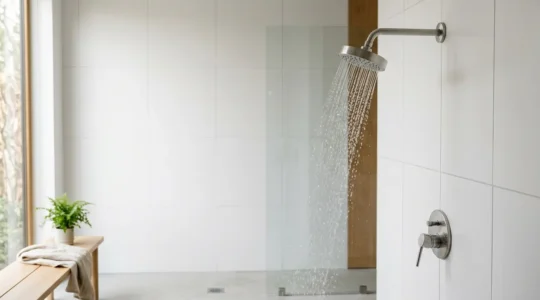
How to Install Water-Efficient Showerheads That Don’t Ruin Pressure?
In summary: The ‘sensation’ of pressure is more important than the GPM (gallons per minute) rating. Modern tech creates a strong spray with less water. Look for showerheads with air-induction (aeration) or oscillating nozzle technologies to mimic high-pressure flow. True…
Read more
Are Smart Locks Safe? The Hacking Risk No One Talks About
Most people believe the primary danger of a smart lock is a sophisticated cyberattack. The reality is far more mundane and therefore more dangerous: the greatest security risk comes from neglected physical maintenance, poor user habits, and a misplaced trust…
Read more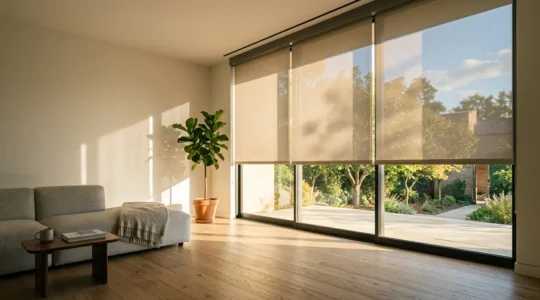
How Motorized Shades Can Lower Your AC Bill by 15% in Summer?
Motorized shades reduce cooling costs not just by blocking light, but by acting as a dynamic thermal barrier that actively manages Solar Heat Gain Coefficient (SHGC). Strategic automation based on sun-path and sensors can cut solar heat gain through windows…
Read more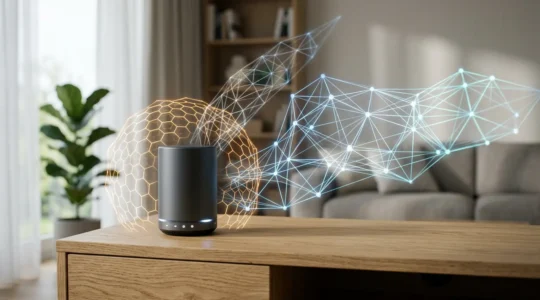
Matter vs. Zigbee: Which Connected Hub Standard Is Future-Proof?
The debate over Matter vs. Zigbee is a distraction; a truly future-proof smart home is built on protocol-agnostic principles of reliability, not allegiance to a single standard. Local processing is non-negotiable for speed and offline resilience, regardless of the protocol…
Read more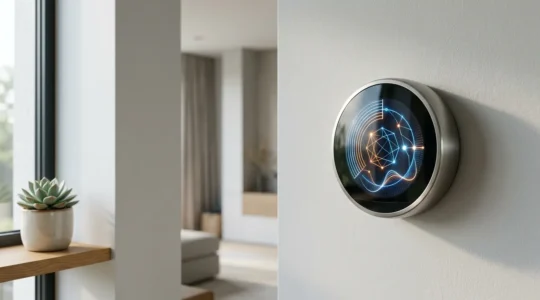
Smart Thermostat ROI: How Long to Recoup the $250 Investment?
A smart thermostat’s return on investment isn’t a marketing guess; it’s a calculable financial outcome based on how effectively it eliminates specific sources of HVAC energy waste in your home. Precision targeting with remote sensors is the primary mechanism for…
Read more
Where to Place Motion Sensors to Avoid False Alarms From Pets?
Contrary to popular belief, solving pet-related false alarms isn’t just about sensor placement or sensitivity tweaks. The true solution is a strategic shift to “logic-fencing”: using multiple, diverse sensors to understand the context behind movement. This system-level intelligence doesn’t just…
Read more
Can Human-Centric LEDs Actually Improve Your Sleep Quality?
Human-centric lighting’s true power isn’t just dimming lights, but delivering a precise “light diet” to reprogram your body’s internal clock for better sleep and daytime energy. Blue-rich light after 8 PM actively suppresses the sleep hormone melatonin, delaying sleep onset…
Read more
How to Identify Energy Waste in a Smart Home That Should Be Efficient?
The frustrating truth is that a ‘smart’ home isn’t automatically an ‘efficient’ one; it’s often just a collection of devices silently adding to your bill. Energy waste hides in plain sight, from phantom loads in entertainment centers to smart thermostats…
Read more
Beyond 15 Apps: How to Truly Centralize Your Smart Home Control
True smart home centralization isn’t about buying another hub; it’s about designing a layered control system that prioritizes reliability and intuitive use for everyone in the house. Prioritize a wired backbone and local processing to ensure critical functions like lights…
Read more