Styles & Ambiances
Your home’s atmosphere speaks volumes before a single word is exchanged. The way a space feels when you enter—whether it whispers calm sophistication or radiates vibrant energy—stems directly from its decorating style and the ambiance it creates. Understanding interior design styles isn’t about memorizing rigid rules or following fleeting trends; it’s about discovering the visual language that resonates with your personality and transforms everyday spaces into environments where you genuinely thrive.
This comprehensive exploration unveils the foundational elements that define decorating styles and ambiances. You’ll learn what distinguishes major design approaches, how to identify which aesthetic aligns with your lifestyle, and the practical techniques for crafting cohesive atmospheres through intentional choices in color, texture, lighting, and arrangement. Whether you’re refreshing a single room or conceptualizing an entire home, these insights provide the framework for creating spaces that feel authentically yours.
Understanding Interior Design Styles
An interior design style represents a consistent visual philosophy expressed through specific combinations of forms, colors, materials, and decorative elements. Think of it as the grammar of spatial design—a coherent system that guides decisions from furniture selection to accessory placement. Unlike temporary decorating fads, established styles have evolved over decades or centuries, reflecting cultural movements, architectural traditions, and philosophical approaches to how we inhabit spaces.
What makes understanding styles valuable isn’t the ability to label a room correctly, but recognizing the underlying principles that create visual harmony. A successfully styled space demonstrates intentionality: the mid-century modern chair complements the clean-lined sofa not randomly, but because both share an aesthetic vocabulary of organic forms and functional simplicity. This coherence registers subconsciously, creating the psychological comfort we call “ambiance.”
Every style comprises identifiable elements that work in concert:
- Silhouettes and forms: Whether furniture features curves or straight lines, ornate details or minimalist profiles
- Color palettes: Specific ranges from neutral monochromatics to bold, saturated hues
- Material preferences: Natural woods, industrial metals, plush textiles, or sleek synthetics
- Pattern and ornamentation: The presence, absence, or type of decorative motifs
- Spatial approach: How rooms handle openness, symmetry, and visual weight
Recognizing these components helps you move beyond imitation toward informed adaptation, selecting elements that serve your practical needs while maintaining aesthetic consistency.
Popular Decorating Styles Explained
The landscape of interior design encompasses dozens of named styles, each with distinct characteristics. Rather than exhaustively cataloging every variation, focusing on major aesthetic families provides practical grounding for most decorating decisions.
Classic and Traditional Styles
Traditional design draws inspiration from European décor of the 18th and 19th centuries, emphasizing symmetry, refined details, and rich materials. Picture matching table lamps flanking a centered sofa, wood furniture with turned legs and decorative molding, layered window treatments, and color palettes anchored in warm neutrals with jewel-tone accents. This approach creates environments that feel established and formal without necessarily being stiff—think of an English country cottage with floral chintz or a stately dining room with crown molding and a crystal chandelier.
The appeal lies in timelessness and a sense of permanence. Traditional spaces communicate stability and heritage, making them particularly suitable for those who value comfort derived from familiar, proven aesthetics rather than experimentation.
Modern and Contemporary Approaches
Often confused, “modern” and “contemporary” represent related but distinct philosophies. Modern design specifically references the mid-20th century movement characterized by clean lines, minimal ornamentation, functional forms, and organic connection to nature. Think platform beds, Eames lounge chairs, open floor plans, and large windows bringing the outdoors in.
Contemporary design describes current trends, making it inherently fluid. Today’s contemporary style typically features neutral color schemes, smooth surfaces, subtle textures, and a less rigid approach than strict modernism. It borrows freely from various periods while maintaining visual simplicity. A contemporary room might pair a sculptural modern light fixture with softer, more inviting seating than pure modernism would typically embrace.
Eclectic and Fusion Styles
Several popular styles celebrate mixing rather than purity. Transitional design bridges traditional warmth with contemporary simplicity, combining the comfortable scale of classic furniture with cleaner silhouettes and understated details. Bohemian style embraces global influences, layered textiles, varied patterns, and collected objects that tell personal stories. Industrial design exposes structural elements—exposed brick, visible ductwork, metal fixtures—celebrating raw, unfinished aesthetics typically with neutral palettes and utilitarian objects as decoration.
These approaches offer flexibility for expressing individuality while still maintaining coherence through deliberate repetition of colors, materials, or forms that tie disparate elements together.
How to Choose the Right Style for Your Space
Selecting a decorating style shouldn’t begin with Pinterest boards or magazine pages, but with honest assessment of how you actually live. The most photographed interiors often prove impractical for real households, while a well-matched style enhances daily life rather than competing with it.
Start by evaluating these practical factors:
- Architectural character: A Victorian townhouse with original molding naturally accommodates traditional or maximalist styles more easily than stark minimalism, while a loft with concrete floors and exposed beams calls for industrial or contemporary approaches
- Natural light quality: Dark rooms benefit from styles featuring lighter palettes and reflective surfaces; sun-drenched spaces can handle deeper, richer color schemes
- Functional requirements: Families with young children might find the pristine surfaces of minimalist modern challenging, while formal traditional might feel too precious for casual daily living
- Maintenance preferences: Some styles demand more upkeep—think white upholstery in a Scandinavian scheme versus the forgiving patina embraced by rustic or industrial aesthetics
Equally important is emotional resonance. Beyond practical constraints, which environments make you feel most comfortable and energized? If you instinctively gravitate toward warm, layered spaces filled with collected objects, fighting that inclination to force a minimalist aesthetic will likely create a house that never feels like home. Conversely, if visual clutter causes anxiety, embracing bohemian maximalism just because it’s trending will undermine your daily peace.
The most successful spaces emerge when style choice aligns with both practical realities and authentic personal preferences rather than external expectations.
Creating Atmosphere Through Design Elements
While style provides the framework, ambiance emerges from how specific design elements interact to affect mood and perception. The same floor plan can feel dramatically different depending on these crucial choices.
Color psychology profoundly influences atmosphere. Cool blues and greens create calming, recessive effects, making rooms feel more spacious and tranquil—ideal for bedrooms and bathrooms. Warm reds, oranges, and yellows energize and advance visually, creating intimacy in dining areas or social spaces. Neutrals offer versatility, with warm grays and beiges providing gentle backdrops that let furnishings and textures create interest, while crisp whites amplify light and architectural details.
Texture adds tactile and visual depth that prevents spaces from feeling flat. A room with varied textures—smooth leather against nubby linen, rough stone beside polished wood, matte walls contrasting glossy ceramics—engages multiple senses and creates sophisticated interest without pattern or color. This proves particularly valuable in neutral schemes where textural contrast provides the primary variation.
Lighting might be the most powerful ambiance tool, yet it’s frequently addressed only as an afterthought. Layered lighting combining ambient (overall illumination), task (functional lighting for specific activities), and accent (highlighting architectural features or artwork) creates flexibility for different moods and uses. Warm-toned bulbs (2700-3000K) generate cozy, intimate atmospheres, while cooler temperatures (3500-4100K) feel crisp and energizing. Dimmer switches transform rigid lighting into responsive systems that adapt from bright morning productivity to soft evening relaxation.
Finally, scale and proportion dramatically affect how spaces feel. Oversized furniture in a small room creates claustrophobia, while undersized pieces in expansive spaces look tentative and unconsidered. Successful rooms demonstrate intentional variation—perhaps one substantial piece balanced by more delicate elements—rather than uniform sizing that lacks visual interest.
Mixing Styles Successfully
Contemporary decorating increasingly celebrates blending rather than strict stylistic purity. The key to successful mixing lies in establishing clear dominance and intentional connection rather than haphazard combination.
The most approachable method follows the 80/20 principle: allow one style to predominate at roughly 80% of the space’s visual elements, then introduce complementary pieces from other aesthetics for the remaining 20%. This might mean a primarily Scandinavian room with industrial lighting and a vintage Persian rug, or a traditional space with contemporary art and streamlined accessories. The dominant style provides coherence while carefully selected contrasts add personality and prevent predictability.
Successful bridging elements that tie disparate styles together include:
- Consistent color palette: Even wildly different furniture styles cohere when sharing a limited color range
- Repeated materials: Wood tones, metal finishes, or fabric choices that recur throughout the space
- Scale relationships: Ensuring pieces share similar visual weight even if their aesthetics differ
- Balanced distribution: Avoiding clustering all modern pieces on one wall while traditional items occupy another
What distinguishes intentional eclecticism from chaotic mismatch is the presence of these unifying threads. A room that “works” despite mixing styles reveals underlying coherence when analyzed—the diverse elements share enough common ground to feel deliberately curated rather than accidentally assembled.
Understanding decorating styles and ambiances empowers you to move beyond copying room settings toward creating personalized environments that support how you actually live. The goal isn’t achieving perfect adherence to a named style, but developing the visual literacy to make confident, cohesive choices that transform your spaces into atmospheres where you feel genuinely at home. Start with one room, experiment with the principles outlined here, and trust that your evolving understanding will naturally refine your aesthetic instincts over time.

How to Clean Crushed Velvet Without Leaving Water Marks?
The fear of leaving water marks often leads to avoiding cleaning velvet altogether. This guide demystifies the process, revealing that the secret isn’t avoiding moisture, but controlling it. By understanding the physics of the velvet pile and using techniques like…
Read more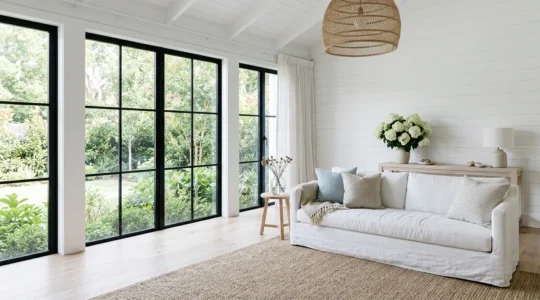
The Hamptons Look, Anywhere: How to Design a Coastal Escape, No Beach Required
Achieving an authentic Hamptons look isn’t about collecting anchors and seashells; it’s about mastering the sensory experience of the coast. Layering varied textures in a neutral palette is the key to transforming a sterile white room into a warm, inviting…
Read more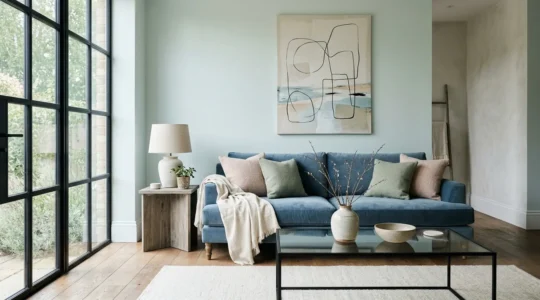
How to Use Pastel Colors in a Living Room Without It Looking Like a Nursery?
The secret to a sophisticated pastel living room isn’t avoiding soft colors, but mastering the contrasts that give them structure and maturity. Dark accents provide essential visual weight to ground the softness of pastels. High-CRI lighting is non-negotiable as it…
Read more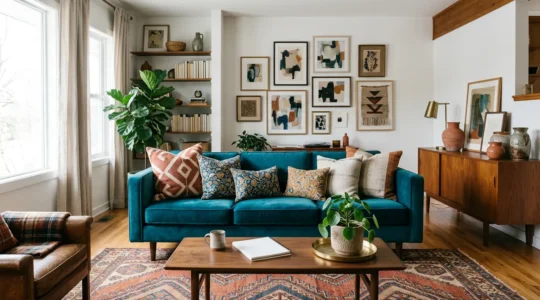
How to Mix Patterns & Eras in a Living Room: A Curator’s Guide to Cohesion
The secret to a cohesive maximalist room isn’t less stuff, but a stronger visual structure that allows your treasures to converse rather than compete. Establish a ‘hero piece’ with strong visual gravitas to anchor the entire design and inform your…
Read more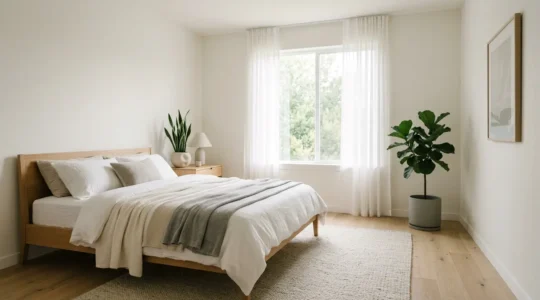
How to Create a Scandinavian Bedroom That Helps You Sleep Better?
A Scandinavian bedroom’s power to improve sleep isn’t about aesthetics; it’s a science-backed strategy to reduce sensory input and lower cortisol. Minimalist design directly reduces the cognitive load and decision fatigue that disrupt rest. Warm, automated lighting syncs your body’s…
Read more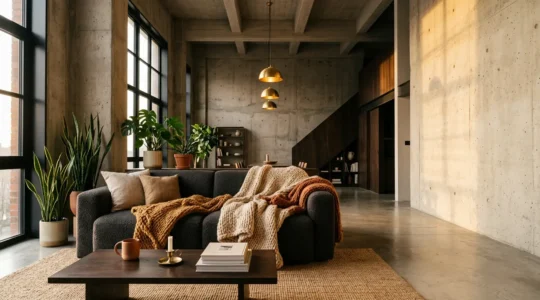
How to Make a Concrete Brutalist Loft Feel Cozy for Winter?
Making a brutalist loft cozy for winter isn’t about hiding the concrete; it’s about strategically mastering its thermal, acoustic, and luminous properties. Fight echo and chill with high-pile textiles that provide both acoustic damping and haptic contrast. Sculpt the space…
Read more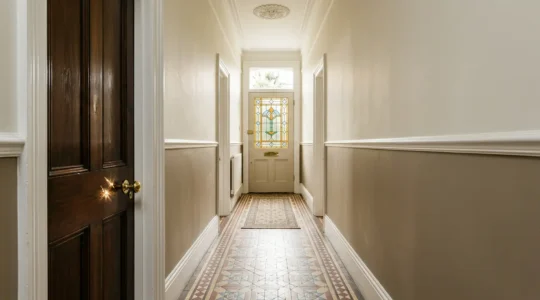
How to Brighten a Narrow Victorian Foyer Without Removing Period Features?
Brightening a narrow Victorian hallway isn’t about fighting its character, but celebrating it through a sophisticated understanding of light and material. True brightness comes from high-quality light (90+ CRI) that reveals authentic colours and textures, not just overwhelming brightness. Strategic…
Read more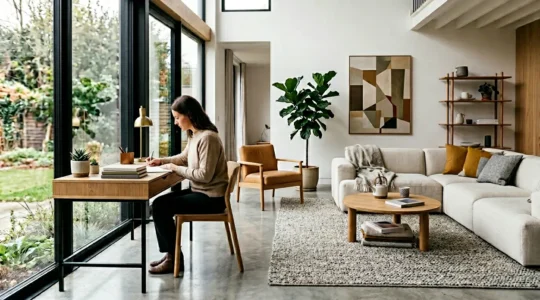
How to Flawlessly Zone an Open-Plan Living Room for Work and Play—Without Building a Single Wall
The key to successful open-plan living isn’t adding barriers, but mastering the invisible forces of light, sound, and flow. Layered lighting and acoustic dampening create psychological, not physical, boundaries that define work and relaxation areas. An effective furniture layout dictates…
Read more