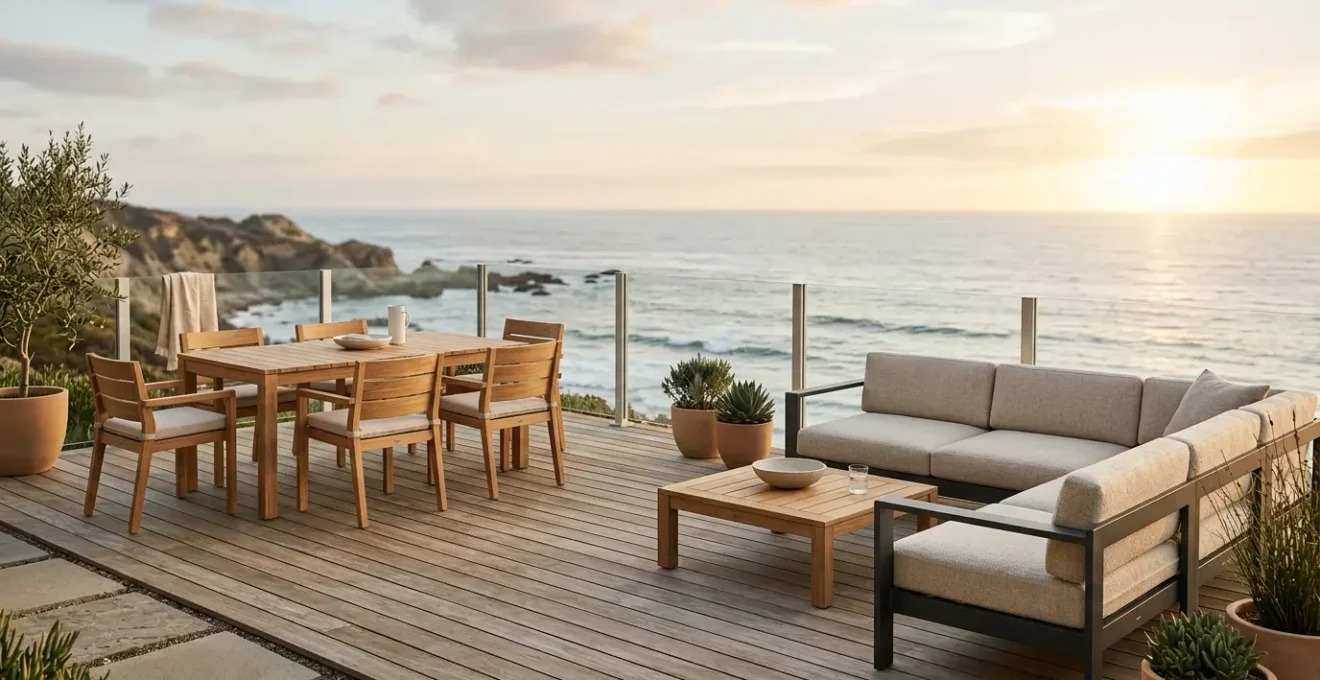
The debate between teak and aluminum misses the most critical factor for coastal durability: the performance of the entire material ecosystem, not just the frame.
- Secondary failure points, like powder coatings on aluminum and the quality of wicker resin, often determine an item’s true lifespan.
- Environmental pressures unique to coastal areas—salt spray, high winds, and intense UV exposure—attack these weaker components first.
Recommendation: Shift your focus from a simple “A vs. B” material choice to a holistic assessment of every component, from the cushion fabric to the frame finish, to ensure genuine, long-term durability.
For homeowners living near the ocean, the cycle of replacing corroded, faded, or broken outdoor furniture is a frustrating and expensive reality. The salty air, relentless sun, and seasonal storms wage a constant war on materials. In the search for a permanent solution, the conversation inevitably narrows to two top contenders: the classic, natural durability of teak versus the modern, rust-proof promise of aluminum. This debate is a valid starting point, but it’s fundamentally incomplete. It presumes the frame material is the only variable that matters.
The reality, as material science experts will attest, is that true coastal longevity is not determined by a single material choice. It is a function of a complete material ecosystem. The integrity of your outdoor setup is only as strong as its weakest link. A flawless aluminum frame can be rendered useless by a peeling powder coat finish, just as a robust teak table can be let down by rusting steel hardware. These secondary failure points are where the battle for durability is truly won or lost.
This guide moves beyond the simplistic teak versus aluminum argument. We will deconstruct the entire outdoor furniture system to reveal what really matters for enduring performance in a coastal environment. We will analyze the critical components that others overlook—from the technical differences in cushion fabrics and the vulnerability of finishes to the structural integrity of weaves and the thermal properties of decking. By understanding the whole system, you can finally make an investment that stands up to the seasons.
To navigate this complex landscape, this article breaks down the key performance factors and maintenance considerations for creating a truly resilient outdoor space. Explore the topics below to build a comprehensive understanding of long-term material durability.
Summary: A Material Science Approach to Coastal Outdoor Furnishings
- The Difference Between ‘Water-Resistant’ and ‘Waterproof’ Outdoor Cushions
- Do You Need Really to Cover Aluminum Furniture in Winter?
- How to Stop Your Lightweight Patio Furniture From Blowing Away?
- How to Remove Bird Droppings From Woven Synthetic Resin Without Damage?
- Why Cheap Wicker Unravels After One Summer
- Are Low-Maintenance Planks Recyclable at the End of Their Life?
- When to Re-Cover Your Awning Instead of Buying a New One
- Composite vs. PVC Decking: Which Polymer Board Is Cooler on Bare Feet?
The Difference Between ‘Water-Resistant’ and ‘Waterproof’ Outdoor Cushions
The first point of failure in many outdoor seating arrangements is not the frame, but the cushions. A saturated, mildew-infested cushion makes furniture unusable, regardless of its structural integrity. The distinction between “water-resistant” and “waterproof” is critical here. Water-resistant fabrics are treated with a coating that causes water to bead up and roll off initially. However, under sustained exposure to rain or pressure from someone sitting on a damp surface, moisture will eventually penetrate the weave.
In contrast, a truly waterproof fabric provides a complete barrier to moisture. This is often achieved through a laminated membrane or a non-porous material. These fabrics can withstand heavy, driving rain and prevent water from ever reaching the inner foam core, which is essential for preventing mold and material degradation. For a coastal environment with unpredictable downpours, investing in genuinely waterproof cushion covers significantly extends usability and lifespan, reducing the need for constant storage.
As seen in the detail above, high-performance fabrics create such surface tension that water droplets remain suspended, unable to penetrate the fibers. While water-resistant options are suitable for areas with only light drizzle, coastal homes benefit immensely from the robust protection of waterproof materials. This ensures cushions remain dry, clean, and ready for use immediately after a storm passes, embodying the principle of true outdoor functionality.
Do You Need Really to Cover Aluminum Furniture in Winter?
Aluminum is a popular choice for coastal furniture precisely because it does not rust. However, this fact leads to a common and costly misconception: that it is entirely invincible to winter weather. While the raw aluminum itself can withstand the cold, its protective and aesthetic finish—the powder coating—is far more vulnerable. This coating is the furniture’s first line of defense against the elements, and it can be compromised by harsh winter conditions, especially freeze-thaw cycles.
During a freeze-thaw cycle, any microscopic moisture that has penetrated the coating expands as it turns to ice, creating micro-cracks. When the temperature rises, the ice melts, allowing more moisture to seep deeper into these new fissures. Over a single winter, this repeated process can cause the powder coating to bubble, flake, or peel away, exposing the raw aluminum beneath. While this exposed aluminum won’t rust, it will oxidize. This process creates a chalky, pitted, and unsightly white surface that is difficult to restore.
Case Study: The Hidden Damage of Freeze-Thaw Cycles
An analysis of coating failures reveals the significant risk posed by temperature extremes. As a study on powder coating degradation shows, repeated freeze-thaw cycles challenge the coating’s integrity. Humidity and temperature swings can cause micro-cracks, allowing moisture to get underneath. This trapped moisture eventually leads to bubbling, peeling, and the onset of aluminum oxidation, permanently damaging the furniture’s finish and value.
This is why covering aluminum furniture in the winter is a crucial maintenance step. A quality, breathable cover prevents direct exposure to snow and ice, effectively stopping the destructive freeze-thaw cycle from damaging the finish. As experts from HC Luxury Outdoor note, “prolonged exposure to freezing temperatures and snow can cause finish damage.” Protecting the finish is synonymous with protecting your investment.
How to Stop Your Lightweight Patio Furniture From Blowing Away?
In coastal regions, high winds are not a rare event; they are a predictable environmental stressor. Lightweight furniture, especially pieces made from aluminum or synthetic wicker, can easily become airborne projectiles, posing a risk to property and safety. While weighing furniture down with sandbags or tying it to railings are common reactive measures, a proactive approach involves selecting furniture with inherent aerodynamic stability.
Furniture design plays a monumental role in wind resistance. Pieces with large, solid, flat surfaces—like chairs with solid backs or large, flat-topped tables—act like sails, catching the wind and generating significant lift. Conversely, designs that allow air to pass through are inherently more stable. This is a key consideration that goes beyond material choice and delves into the physics of an object’s interaction with its environment. Choosing the right design is a form of passive safety.
To improve wind resistance, look for specific design features. A chair with a slatted or open-weave back will experience dramatically less wind load than a solid-backed equivalent. As noted in a guide on hurricane-resistant furniture design, an open-weave design allows wind to pass through, mitigating the “sail effect.” Other effective strategies include:
- Opting for low-profile, curved furniture that encourages wind to flow over it rather than pushing against it.
- Choosing pieces with a low center of gravity, such as those with splayed legs or a wider base.
- Selecting tables with built-in features like an umbrella hole, which can help equalize pressure, or mesh tops that allow airflow.
- Considering furniture collections where pieces can be interlocked or connected to form a heavier, more stable unit.
How to Remove Bird Droppings From Woven Synthetic Resin Without Damage?
Synthetic resin wicker is a staple of coastal outdoor living, prized for its resistance to moisture and UV degradation. However, its woven texture, while aesthetically pleasing, can make it challenging to clean. Bird droppings are a particularly difficult problem, as they are not only unsightly but also acidic. If left to sit, they can stain and even begin to break down the surface of the resin strands. Using the wrong cleaning method, such as a stiff-bristled brush or harsh chemical, can cause permanent scratching or discoloration, ruining the finish.
The key to safe removal is a gentle, multi-step process that neutralizes the acid and lifts the debris without abrading the synthetic material. Rushing the process or applying excessive force is the most common cause of damage. The intricate weave of high-quality resin requires a patient approach to preserve its texture and color integrity for the long term.
A methodical approach ensures the material is preserved. The goal is to soften, lift, neutralize, and rinse, restoring the wicker to its original condition without leaving any trace of the cleaning process itself. Follow these steps for safe and effective removal:
- Soften First: Apply tepid (lukewarm) water to the dried deposit. Allow it to sit for several minutes to soften the material, making it easier to lift. Never try to scrape a dry, hardened dropping.
- Gently Lift: Use a soft-bristle brush (like a toothbrush) or the edge of a plastic scraper to gently lift away the softened debris. Work with the direction of the weave, not against it.
- Neutralize the Acid: Create a solution of mild, pH-neutral soap and water, or a highly diluted solution of white vinegar and water. Use a soft cloth to clean the affected area, which will help neutralize any lingering acidic residue.
- Rinse Thoroughly: Use a hose on a low-pressure setting or a clean, wet cloth to rinse away all soap or vinegar solution. Residual cleaning agents can attract dirt over time.
- Air Dry: Allow the furniture to air dry completely before use.
Why Cheap Wicker Unravels After One Summer
Not all synthetic wicker is created equal, a fact many homeowners discover after a single season of sun and rain. The sight of a once-beautiful chair unraveling or cracking is a classic example of a secondary material failure. The difference between a product that lasts a decade and one that fails in a year often comes down to the specific polymer used: high-density polyethylene (HDPE) versus low-grade polyethylene (PE) or PVC.
Premium all-weather wicker is made from HDPE, a robust, solid polymer that has color and UV inhibitors compounded all the way through the material. This means that even if it gets a surface scratch, the color underneath is the same, and its resistance to sun damage is not compromised. It feels dense and substantial to the touch. In contrast, cheap wicker is often made from lower-grade PE or PVC. These materials can be brittle, and more importantly, they often lack sufficient UV inhibitors. Under intense coastal sun, the plasticizers that make the strands flexible break down, causing them to become stiff, crack, and ultimately unravel from the frame.
You can often identify low-quality resin by feel. As experts in HDPE furniture explain, cheap PE feels “plasticky, hollow, and may crackle or deform when pinched and twisted,” whereas high-quality HDPE feels robust and solid. This difference in material quality has a direct and dramatic impact on lifespan. A study comparing wicker types found that while economy-grade resin wicker lasts just 2-5 years, premium HDPE wicker can last for ten years or more with proper care. This stark difference highlights the importance of investigating the specific material beyond the generic “all-weather wicker” label.
Are Low-Maintenance Planks Recyclable at the End of Their Life?
The concept of durability extends beyond simple resistance to weather; it also encompasses the full lifecycle of a product, including its environmental impact at the end of its life. Low-maintenance planks, used in decking and increasingly in furniture, are marketed on their longevity. But what happens when they eventually need to be replaced? The recyclability of these materials is a complex issue that homeowners should consider.
Most “composite” decking and planks are a blend of wood fibers and recycled plastics, typically polyethylene (PE) or polypropylene (PP). This intimate mixture, while creating a durable product, is also its downfall in recycling. Separating the wood fibers from the plastic is an extremely difficult and energy-intensive process. Consequently, most composite materials are not recycled in the traditional sense. Instead, they are often downcycled into lower-grade products like park benches or parking blocks. They cannot be used to create new decking, breaking the circular economy loop.
Pure PVC decking, being a single polymer, is technically more recyclable. However, the practical challenge lies in the lack of widespread collection programs for construction and demolition materials. Your local curbside recycling program is not equipped to handle large, bulky items like decking planks. This logistical gap means that even technically recyclable materials often end up in a landfill.
Your Checklist for Assessing a Manufacturer’s Sustainability
- Material Composition: What percentage of your product is made from post-consumer or post-industrial recycled materials?
- End-of-Life Program: Do you offer a take-back or recycling program for your product once it reaches the end of its service life?
- Local Recyclability: Is the material designated as a #2 (HDPE) or #5 (PP) plastic, and does my local municipal recycling facility accept it?
- Documented Lifespan: What is the warrantied or expected lifespan of the product under real-world coastal conditions to delay replacement?
- Manufacturing Impact: Can you provide documentation (like an Environmental Product Declaration) on the environmental impact of your manufacturing process?
When to Re-Cover Your Awning Instead of Buying a New One
Awnings are a major component of the coastal outdoor ecosystem, providing essential shade that protects both you and your furniture from harsh UV rays. Over time, however, the fabric will inevitably succumb to the elements. It may fade, tear, or develop stubborn mildew. When this happens, homeowners face a key decision: should you replace the entire awning mechanism or simply re-cover it with new fabric?
The answer depends almost entirely on the condition of the awning’s frame and mechanical components. The frame—typically made of aluminum or steel—and the retraction mechanism are the most expensive parts of the system. If this structure is in good condition, with no significant corrosion, bent arms, or a struggling motor, then re-covering is almost always the more cost-effective and sustainable option. Replacing the fabric can give the awning a brand-new look and another decade of life for a fraction of the cost of a full replacement.
Before making a decision, conduct a thorough inspection of the frame. Check for signs of significant rust on steel components or deep, chalky oxidation on aluminum parts. Operate the mechanism, whether manual or motorized, to ensure it moves smoothly and retracts fully without straining or making unusual noises. If the structure is sound, your decision is simple. Investing in a high-quality replacement fabric, perhaps upgrading to a more durable and UV-resistant option than the original, is a smart financial and environmental choice. However, if the frame itself is compromised, investing in new fabric would be putting a temporary fix on a failing system.
Key Takeaways
- True durability comes from a “material ecosystem,” where the frame, finish, fabric, and hardware all work together to resist environmental stress.
- Secondary failure points, such as a peeling powder coat, a waterlogged cushion, or a brittle wicker strand, are often the true cause of furniture replacement.
- Beyond material choice, design features that mitigate environmental forces (like slatted backs for wind resistance) are crucial for performance in coastal areas.
Composite vs. PVC Decking: Which Polymer Board Is Cooler on Bare Feet?
The final element of the outdoor living ecosystem is the surface everything rests on: the decking. In sunny coastal climates, the surface temperature of decking can become a major comfort and safety issue, especially for children and pets. Dark-colored materials and those with high thermal mass can become painfully hot to the touch. When choosing between polymer-based decking options like composite and PVC, heat retention is a critical performance metric.
Both composite (a mix of wood and plastic) and pure PVC (polyvinyl chloride) decking will get warmer than light-colored wood in direct sun. However, there are significant differences between them. Generally, lighter colors will stay cooler than darker colors across all material types. A white or light beige board will reflect more solar radiation than a dark brown or grey one. This is the single most important factor in managing deck temperature.
Between materials, pure PVC decking often has a slight advantage over many composites in terms of heat dissipation. Composites containing dark wood fibers can sometimes retain more heat. Furthermore, the surface texture and technology matter. Some modern PVC and composite boards are engineered with cool-deck technology and reflective pigments designed specifically to reduce heat absorption. When comparing products, inquiring about heat performance is just as important as asking about scratch or stain resistance. Based on material properties alone, it’s known that some plastics perform better than others; for example, an analysis shows that HDPE plastic and all-weather wicker stay relatively cool to the touch compared to materials like metal that absorb heat rapidly.
To make a truly informed decision for your coastal home, it’s essential to revisit the core principles of material science. The best choice is never one-size-fits-all, but rather a carefully considered system where each component is chosen for its ability to withstand specific environmental pressures. For a deeper dive into how finishes are tested against these pressures, it is useful to remember the core vulnerabilities we examined earlier, such as the degradation of protective coatings.
By adopting this holistic, system-based approach, you can move beyond the endless cycle of repair and replacement. The next step is to apply this thinking to your own space, evaluating not just the primary materials, but every secondary component to create an outdoor environment built for genuine, long-term resilience.