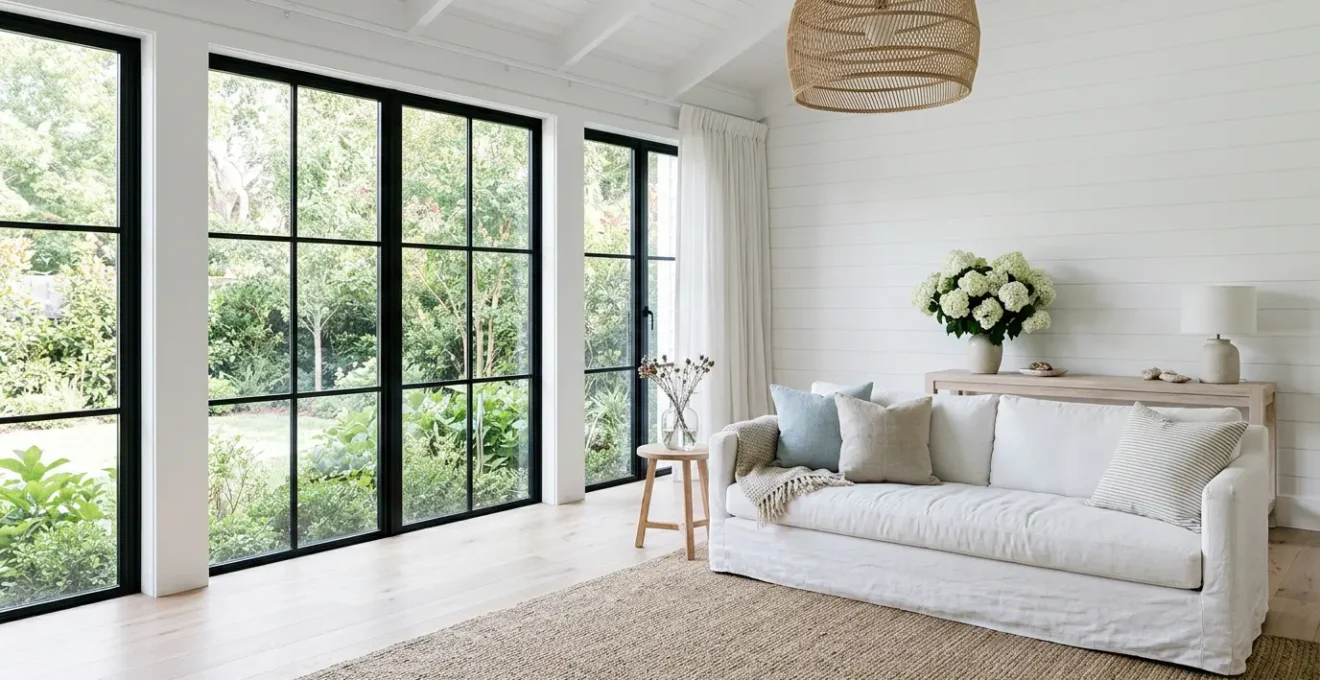
Achieving an authentic Hamptons look isn’t about collecting anchors and seashells; it’s about mastering the sensory experience of the coast.
- Layering varied textures in a neutral palette is the key to transforming a sterile white room into a warm, inviting space.
- Mimicking natural light cycles—from bright morning sun to a warm sunset glow—with smart lighting strategies creates a genuine vacation feel indoors.
Recommendation: Focus on evoking a feeling through the sophisticated interplay of light and texture, rather than simply imitating a look with literal props.
The dream of a Hamptons home is less about a specific location and more about a feeling: a permanent, breezy escape characterized by sun-drenched rooms, relaxed elegance, and a deep connection to the outdoors. For those of us living miles from any coastline, attempting to capture this aesthetic can be a frustrating exercise. We follow the common advice—paint everything white, add a splash of navy blue, buy a linen sofa—yet the result often feels less like a sophisticated coastal retreat and more like a sterile clinic or, worse, a kitschy, themed guest room.
The conventional wisdom focuses on the *what*—the checklist of items to buy. But this approach misses the soul of the style. The Hamptons look is not a collection of objects but a masterful execution of design psychology. It’s about understanding how to manipulate light to mimic a seaside sunrise, how to layer textures to evoke the feeling of sand and driftwood, and how to arrange a space to feel both open and intimate. It’s about creating a sensory experience that tricks the mind into feeling the calm and freedom of the coast, no matter where you are.
This guide moves beyond the superficial. We won’t just list the ingredients; we will reveal the techniques. We will explore the subtle mistakes that derail the aesthetic and the expert strategies that elevate it. By focusing on the principles of light, texture, and spatial perception, you will learn how to build an authentic Hamptons sanctuary that is a true reflection of relaxed sophistication, turning your landlocked house into the permanent vacation home you’ve always wanted.
To guide you in creating this authentic coastal haven, we’ve structured this article around the core challenges and solutions. The following sections will walk you through the essential principles for mastering this coveted style.
Summary: The Hamptons Look, Anywhere: How to Design a Coastal Escape, No Beach Required
- Why Your All-White Room Feels Like a Hospital, Not a Vacation Home
- Shutters or Sheers: Which Window Treatment Defines Hamptons Style?
- The Decor Mistake That Turns Coastal Style into a Theme Park
- How to Layer Lamps to Mimic a Sunset Glow Indoors?
- Navy vs. Duck Egg: Which Blue Suits a Modern Hamptons Kitchen?
- Hidden Fasteners vs. Face Screws: Is the Extra Cost Worth It?
- Slipcovered vs. Upholstered: Which Linen Sofa Is Better for Families?
- How to Zone an Outdoor Dining Area for Intimacy in a Large Yard?
Why Your All-White Room Feels Like a Hospital, Not a Vacation Home
The advice to “paint it all white” is the most common starting point for a Hamptons look, but it’s also the easiest to get wrong. When executed without a deeper understanding, an all-white palette can feel cold, sterile, and flat—the very opposite of the warm, inviting escape you’re trying to create. The problem isn’t the color white itself, but the lack of sensory information that accompanies it. Our perception of space is complex; colors can make spaces appear larger, smaller, warmer, or cooler based on a variety of contextual factors, and a monolithic white environment lacks the cues our brains need to feel comfortable and engaged.
The solution is not to abandon white, but to enrich it with a symphony of textures. This is the core secret to a successful Hamptons interior. Think of your white walls as a blank canvas, not the finished painting. The artistry comes from layering materials that engage the sense of touch and create subtle variations in how light is absorbed and reflected. A nubby linen throw, a tightly woven seagrass rug, a smooth piece of bleached oak, and the gentle grain of a rattan chair all contribute to a rich visual and tactile landscape. As Decorilla designer Casey points out, this is how you add warmth and character.
Different textures, woods, and metal can warm all-white living room ideas. A neutral palette allowed form to do the talking.
By focusing on sensory layering, you move from a one-dimensional color scheme to a three-dimensional experience. The interplay of light across these varied surfaces creates depth, shadow, and interest, making the room feel lived-in, sophisticated, and deeply calming. This tactile richness is what transforms a clinical white box into a true coastal sanctuary.
As you can see, the beauty lies in the details. The way light catches the individual fibers of a woven basket or highlights the subtle grain of a wooden surface provides the visual interest that prevents the space from feeling monotonous. This focus on material authenticity is what gives the room its soul.
Shutters or Sheers: Which Window Treatment Defines Hamptons Style?
Window treatments in a Hamptons-style home are not mere decoration; they are primary tools for managing the home’s most vital asset: natural light. With research showing that the average American spends 90% of their time indoors, maximizing the quality and quantity of daylight is crucial for our well-being. The debate between plantation shutters and sheer linen curtains isn’t about which is more “correct,” but which strategy of light manipulation best serves your space and lifestyle. The goal is to create a connection to the outdoors and harness the psychological benefits of daylight.
This approach is rooted in biophilic design, an architectural philosophy centered on connecting humans with nature. As noted by experts in the field, this connection has profound physiological effects.
Natural light regulates your sleep-wake cycle, influences your mood, and affects how your body produces vitamin D and serotonin.
– Coastal Window Fashions NC, Biophilic Window Treatments for Coastal Homes
Plantation shutters offer crisp, architectural lines and unparalleled control. They allow you to angle the louvers to direct light, block harsh glare while maintaining brightness, and create beautiful, linear shadows that move throughout the day. This active light management is perfect for rooms that need versatility, like a home office or a west-facing living room. They provide a sense of solid, classic structure that is fundamental to the Hamptons aesthetic.
Sheer linen curtains, on the other hand, excel at diffusing light. They soften the incoming sun, bathing the room in a gentle, ethereal glow that mimics the soft, misty light of a coastal morning. They billow with the slightest breeze, adding a sense of movement and life to the space. Sheers are ideal for creating a relaxed, dreamy atmosphere in bedrooms and living areas, where the goal is to create a soft, serene environment. Ultimately, the best choice—or even a combination of both—is the one that helps you craft the specific coastal atmosphere you desire.
The Decor Mistake That Turns Coastal Style into a Theme Park
There is a fine line between inspiration and imitation, and crossing it is the single biggest mistake in coastal design. It’s the moment a sophisticated, breezy retreat devolves into a nautical theme park, cluttered with generic, mass-produced props. As interior designer Cassie Scaldaferri warns, restraint is paramount: “One mistake that people make when trying to achieve this interior design style is going overboard with coastal touches. By adding too many, the look can become overdone and too themed.” The goal is to evoke the feeling of the coast, not to literally replicate it with a legion of starfish, anchors, and “Life’s a Beach” signs.
This is where the principle of curated authenticity comes into play. Instead of filling shelves with cheap trinkets, a successful Hamptons look relies on a few carefully chosen, high-impact pieces that have a genuine connection to nature or craftsmanship. Think of a single, beautiful piece of sculptural driftwood, a collection of hand-blown glass vases in sea-glass tones, or a large-scale abstract painting that captures the colors and movement of the ocean. These items suggest the coast in an artful, elevated way.
To avoid the theme-park trap, it’s essential to audit your design choices with a critical eye. Ask yourself if an object is adding to the serene, sophisticated atmosphere or simply shouting “beach.” A thoughtful, edited approach will always feel more luxurious and authentic than a room crowded with clichés. The following checklist can help you steer clear of the most common pitfalls.
Your Audit for an Authentic Coastal Look
- Inspiration Over Imitation: Are you using literal props like word signs or an overabundance of wood sea figures? Instead, draw inspiration from coastal elements: think soft blue-greens, driftwood tones, and gauzy textures.
- Material Variety: Are you relying too heavily on one material? A truly rich space layers different natural elements like woods, wovens, linens, and metals to create depth and interest.
- Intentional Lighting: Is your only light source a single overhead fixture? A sophisticated room layers its lighting with table lamps, floor lamps, and accent lights to create mood and function.
- Lifestyle-Led Design: Is the design purely aesthetic, or does it support how you actually live? The best design is both beautiful and functional, enhancing your daily routines.
- Subtle, Not Literal: Does your decor feel like a collection of beach souvenirs? Aim for elements that *evoke* the coast—like woven textures and soft, sandy hues—rather than items taken directly *from* it.
How to Layer Lamps to Mimic a Sunset Glow Indoors?
A hallmark of the Hamptons aesthetic is its masterful use of light, which goes far beyond simple illumination. It’s about atmospheric mimicry—the art of recreating the changing qualities of natural, coastal light within your home. One of the most powerful ways to achieve this is by layering artificial light sources to replicate the warm, enveloping glow of a sunset. This isn’t achieved with a single, powerful overhead light, but with a carefully orchestrated trio of lighting types: ambient, task, and accent.
This strategy is directly linked to our natural biological cycles. According to the principles of circadian rhythm lighting, our bodies are programmed to respond to the changing color temperature of sunlight throughout the day. As Crown Lighting Group explains, “Cooler color temperatures are used during the day to promote alertness… while warmer color temperatures are used in the evening.” To mimic a sunset, you must choose bulbs with a low color temperature. While lighting research has established that the average CCT of sunlight ranges from 2700K to 6500K, the golden hour glow you want to replicate sits squarely at the bottom of that scale. Look for bulbs labeled 2700K or “warm white” to produce that soft, amber light.
The magic happens when you combine these warm bulbs in a layered scheme.
- Ambient Lighting: This is the foundation. It’s the soft, overall glow from a floor lamp with a linen shade or subtle uplighting that washes a wall in warm light.
- Task Lighting: These are more focused pools of light for specific activities, like a table lamp next to a reading chair or under-cabinet lighting in a kitchen.
- Accent Lighting: This is the dramatic final touch. A small spotlight aimed at a piece of art or a plant creates highlights and deep shadows, adding depth and a sense of theater to the room.
By turning off harsh overhead lights in the evening and relying on this layered, warm-toned system, you create a dynamic and intimate atmosphere that transforms your living space into a serene, dusk-time escape.
Navy vs. Duck Egg: Which Blue Suits a Modern Hamptons Kitchen?
While the Hamptons palette is famously rooted in whites and blues, the specific shade of blue you choose is a powerful strategic decision that dramatically impacts the room’s atmosphere. The choice between a deep, classic navy and a light, airy duck egg is not just about preference; it’s an exercise in spatial psychology. As a general rule, color science demonstrates that light shades make rooms feel larger and brighter, while darker colors absorb light and introduce a sense of depth and intimacy. In a kitchen, this choice defines the room’s entire character.
Duck egg blue is the color of airiness and expansion. Its light, soft tone reflects a great deal of light, making a space feel larger, brighter, and more open. It’s an excellent choice for smaller kitchens or spaces that lack abundant natural light. Duck egg blue has a gentle, calming effect and evokes the pale, hazy sky of a coastal morning. Paired with white cabinetry and light wood floors, it creates a kitchen that feels fresh, clean, and endlessly spacious—a classic, breezy take on the Hamptons style.
Navy blue, conversely, is the color of sophistication and intimacy. It’s a bold, grounding choice that adds drama and a strong architectural presence. In a large, open-plan kitchen, navy can work wonders. Psychologically, it creates a sense of stability and confidence, and as color experts note, it can “make a large, open space feel more intimate.” Used on lower cabinets or a central island, navy can anchor the room without overwhelming it. Paired with crisp white countertops, brass hardware, and warm wood accents, navy creates a modern, slightly more formal, and incredibly chic version of the Hamptons kitchen—perfect for those who love to entertain.
The “right” blue is the one that achieves your desired psychological effect. Do you want your kitchen to feel expansive and serene like an open beach, or cozy and sophisticated like a private yacht club? Your answer will guide you to the perfect shade for your modern coastal escape.
Hidden Fasteners vs. Face Screws: Is the Extra Cost Worth It?
At first glance, a question about fasteners might seem oddly technical for a discussion on interior style. However, if we interpret “fasteners” not as literal screws, but as the underlying details that hold a design together, the question becomes profoundly relevant. Is it worth investing in the subtle, high-quality “hidden fasteners” of design, or can you get by with the more obvious, cheaper “face screws”? In the context of the Hamptons style, the answer is clear: the investment in subtlety and quality is everything.
The “face screws” of coastal decor are the clichés: the generic shell-printed cushions, the mass-produced anchor motifs, the flimsy particleboard furniture. They are obvious, superficial, and ultimately detract from the feeling of effortless luxury. The “hidden fasteners,” on the other hand, are the foundational elements of quality that create a seamless, sophisticated look. This includes solid wood furniture, tailored slipcovers, and, most importantly, a rich variety of textures.
As designer Libby Langdon states, texture is the invisible force holding the entire aesthetic together.
Texture is the secret sauce for just about any interior design look, and the Hamptons style thrives on it. Incorporate natural materials like jute, rattan, and wicker into your furniture, accessories, and flooring choices.
– Libby Langdon, Libby’s 10 Tips on Creating Classic Hamptons Interior Design Style
Investing in a high-quality, deep-pile wool rug, a heavy-gauge linen for your curtains, or a sofa with real wood feet might seem like an “extra cost.” But these are the hidden fasteners that give the room its integrity and substance. They provide the tactile richness and authenticity that cannot be faked. This is where the budget should be focused—on the foundational pieces and materials that provide lasting quality and sensory delight, rather than on fleeting, decorative props. The seamless, elevated finish they provide is always worth the investment.
Slipcovered vs. Upholstered: Which Linen Sofa Is Better for Families?
The linen sofa is an icon of Hamptons style, embodying its signature blend of comfort and elegance. For families, however, the choice between a permanently upholstered sofa and a slipcovered one is a critical decision of practicality. While both can offer the right look, the slipcovered sofa is unequivocally the superior choice for a home that is meant to be lived in, not just admired. It perfectly captures the relaxed, unfussy spirit of coastal living while offering unmatched functionality.
However, not all slipcovers are created equal. The key to maintaining an elevated look, as opposed to a shabby-chic or student-house vibe, lies in the fit. As the experts at Driven by Decor highlight, “The key to an elevated coastal style… is having slipcovers that are tailored to the shape of your furniture (each cushion should have its own cover) vs. baggy, one-size-fits-all slipcovers.” A well-made, tailored slipcover should fit as snugly as upholstery, defining the sofa’s form while offering the immense benefit of being completely removable and washable. This is non-negotiable for a household with children or pets.
The practical advantages are best illustrated by real-world application, where the investment in quality slipcovered furniture pays dividends over time.
Case Study: The Family-Friendly Slipcovered Sectional
A family room sectional from a project highlighted by Driven by Decor demonstrates the practical genius of slipcovers in coastal style. The sofa’s tailored slipcover, crafted from a durable performance fabric, allows for easy laundering after inevitable spills, ensuring the piece always looks fresh. This design choice means that wear and tear doesn’t necessitate replacing an entire, expensive sofa; only the cover needs to be replaced or repaired. This proves to be a cost-effective long-term strategy that perfectly maintains the relaxed, lived-in aesthetic essential to family-friendly Hamptons style without sacrificing sophistication.
Ultimately, a tailored slipcovered sofa offers the best of both worlds: the pristine, elegant look of a classic linen sofa and the low-stress, real-world practicality that a modern family requires. It is the embodiment of relaxed luxury.
Key Takeaways
- The Hamptons look is an experience, not a theme. Focus on evoking the *feeling* of the coast through sensory layering of light and texture.
- Mastering light is crucial. Use window treatments to manage daylight for well-being and layer warm-toned lamps (2700K) to mimic a sunset glow.
- Authenticity trumps quantity. Invest in a few high-quality, textural pieces and avoid the “theme park” trap of too many literal coastal props.
How to Zone an Outdoor Dining Area for Intimacy in a Large Yard?
For a landlocked home, the outdoor space is the final frontier in creating a complete coastal escape. The challenge, especially in a large, open yard, is to craft a sense of intimacy and purpose, transforming an undefined patch of grass into an intentional outdoor “room.” The solution lies in psychological zoning, using principles of biophilic design to create a space that feels both connected to nature and comfortably enclosed. Biophilic design, as defined by Terrapin Bright Green, “refers to the incorporation of natural elements into architecture… It helps explain why some urban parks and buildings are preferred over others.”
To create an intimate dining zone, you can apply several key biophilic patterns. The most powerful is the “Prospect and Refuge” principle. This involves positioning your dining area so that diners have a clear, appealing view out into the yard (prospect) while feeling protected from behind or above (refuge). This can be achieved by placing the dining table under a pergola, against a wall of lush climbing plants, or sheltered by a cluster of tall ornamental grasses. This sense of enclosure provides a subconscious feeling of safety and comfort, encouraging guests to linger.
Further enhance the space by using these strategies to create a multi-sensory experience:
- Visual Connection with Nature: Don’t just place a table in the yard; frame a specific view. Use a pergola or strategically planted shrubs to create a “window” that looks onto a beautiful flower bed or a striking tree.
- Natural Materials: Connect the indoor and outdoor environments by using materials like a teak dining table, wicker chairs, and a jute outdoor rug. These textures feel natural underfoot and to the touch.
- Dynamic & Diffuse Light: Mimic the dappled light filtering through a tree canopy. A slatted pergola or a large outdoor umbrella can create shifting patterns of light and shadow, which is proven to be stress-reducing.
By thoughtfully designing your outdoor area using these principles, you’re not just setting up a table; you’re creating a destination. You are curating a specific experience that makes your outdoor space an essential part of your coastal-inspired home.
Now that you’re equipped with the core principles of light, texture, and authentic curation, the next step is to apply this knowledge to your own space. Begin by evaluating a single room and identifying one small change you can make to enhance its sensory experience.