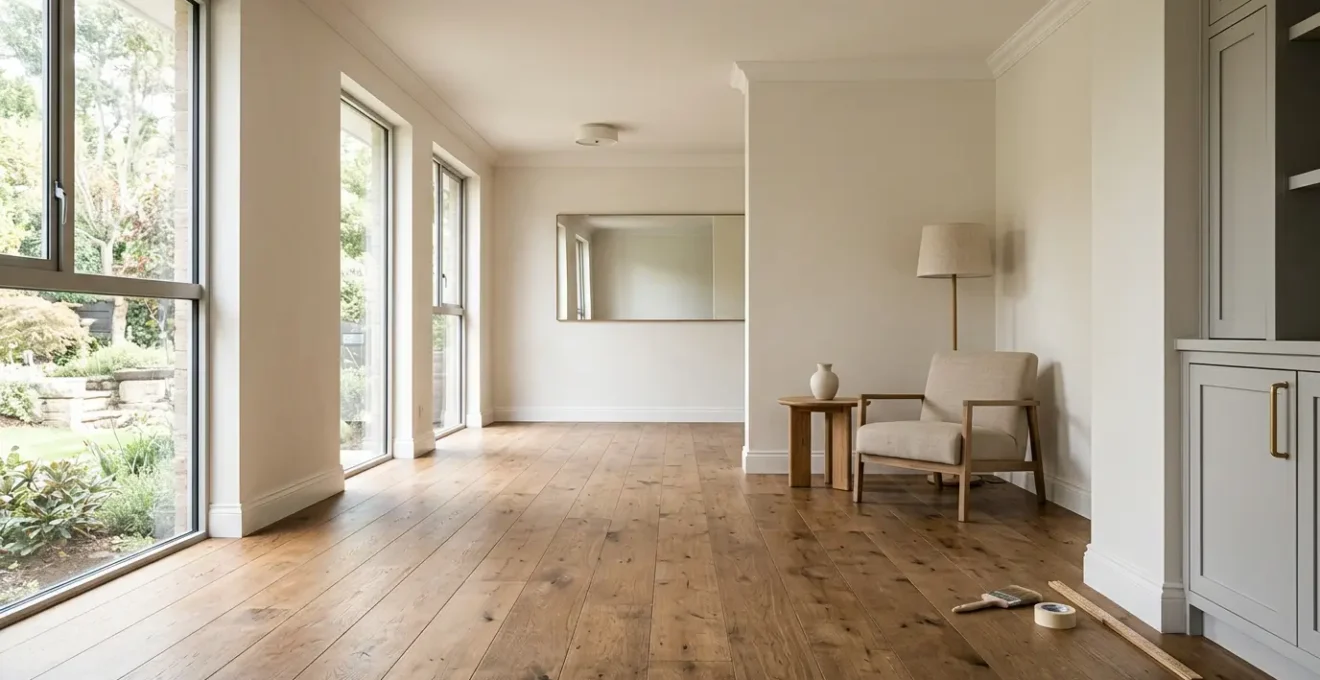
The highest resale value comes not from the most expensive upgrades, but from strategic, low-cost improvements that eliminate buyer objections and maximize perceived value.
- Minor, cosmetic updates like painting cabinets and replacing a front door consistently offer higher percentage returns than major, high-cost remodels.
- Buyer psychology is key; a depersonalized, well-maintained home allows potential owners to envision themselves in the space, increasing its perceived worth.
Recommendation: Focus your renovation budget on projects with a proven cost-recoupment ratio that appeal to the widest possible market, treating your home as a financial asset, not just a personal space.
When preparing a home for sale, many owners fall into a predictable trap: they renovate based on their personal tastes or follow outdated advice. They pour money into massive remodels, believing a brand-new kitchen or a lavish primary suite is the ticket to a higher sale price. The reality, however, is often a painful lesson in financial return. From a real estate strategist’s perspective, the goal isn’t to build your dream home; it’s to prepare a high-value asset for the market. This requires a fundamental shift in thinking—from homeowner to investor.
The core principle is maximizing the cost-recoupment ratio. This isn’t about spending the most; it’s about spending smart. It’s about understanding which upgrades remove a buyer’s reasons to negotiate down the price and which create a powerful first impression that translates into perceived value far exceeding the actual cost. We will move beyond the generic “kitchens and baths sell homes” platitude to dissect the specific, data-backed upgrades that truly impact your bottom line. We’ll analyze the financial viability of painting versus replacing, the strategic value of a front door, and the market-driven logic behind flooring choices.
This guide provides a market-driven framework for making these critical decisions. By focusing on buyer psychology and proven ROI data, you can ensure that every dollar spent on renovation is an investment that pays dividends at the closing table.
To navigate this strategic approach, this article breaks down the most common renovation dilemmas, analyzing each through a financial lens. The following sections provide a clear roadmap to maximizing your property’s resale value.
Summary: A Strategist’s Guide to High-ROI Renovations
- Painting Cabinets vs. Replacing: Which Returns More Money?
- Does Converting a Garage Add Value if You Lose Parking?
- The $500 Front Door Makeover That Selling Agents Swear By
- Hardwood vs. Carpet in Bedrooms: What Do Today’s Buyers Want?
- How Personal is Too Personal? De-personalizing a Home for Sale
- Why External Insulation Might Ruin Your Facade’s Resale Value
- To Paint or Not to Paint: Will Painting Brick Lower My Resale Value?
- How to Calculate the Carbon Footprint of Your Home Renovation?
Painting Cabinets vs. Replacing: Which Returns More Money?
The kitchen is often the emotional and financial heart of a home, but a full remodel is a common way homeowners over-capitalize before a sale. The data points to a more financially prudent path: refinishing. A minor kitchen remodel, which includes painting existing cabinets, offers a significantly higher return on investment than a major overhaul. In fact, Remodeling Magazine’s 2023 report indicates an 84% ROI for a minor kitchen remodel, a figure that full-scale renovations struggle to match.
The financial logic is simple: you are addressing a major buyer objection—an outdated kitchen—at a fraction of the cost. Professional cabinet painting gives the appearance of a new kitchen, achieving high perceived value for a low actual cost. For a homeowner looking to sell, this is the ideal investment scenario. The money saved by not replacing can be allocated to other high-impact updates like new hardware and modern light fixtures, further enhancing the space’s appeal without breaking the bank.
The key is achieving an investment-grade finish. A professional job that looks and feels durable signals quality and care to prospective buyers. When structurally sound cabinets are given a fresh, neutral, and professionally applied coat of paint, they present as new to most buyers. This strategic move eliminates the “needs a new kitchen” thought from a buyer’s mind, preserving your asking price and accelerating the sale. It is the perfect example of a market-agile upgrade.
Does Converting a Garage Add Value if You Lose Parking?
Converting a garage into living space seems like a straightforward way to increase a home’s square footage and, therefore, its value. However, this is one of the most context-dependent upgrades a homeowner can make. The financial return hinges almost entirely on one critical factor: parking. In areas where on-street or driveway parking is abundant, a well-executed conversion can be a significant value-add, potentially giving homeowners up to an 80% ROI by adding a bedroom, office, or family room.
The risk, however, is creating a new buyer objection. If the conversion eliminates the primary or only off-street parking, it can actively decrease the property’s value and narrow the pool of interested buyers. As one case study highlights, in parking-scarce neighborhoods, the loss of a garage can be a deal-breaker, negating any value gained from the extra living space. The key is to analyze your specific market’s needs before starting any work.
This sentiment is echoed by experts on the ground who see the practical consequences of such decisions. As real estate broker Patrick Hake notes, the lack of storage and parking can create significant friction for buyers.
I have seen numerous examples of homes with converted garages that have little on street or driveway parking and/or have nowhere to store the junk that would normally go in a garage. If someone were to want to do a conversion, they should have ample additional parking and a shed or some other type of storage space for typically garage stuff.
– Patrick Hake, RE/MAX Gold, Real Estate Broker
Ultimately, a garage conversion is only a sound investment if it solves more problems for a potential buyer than it creates. If parking and storage are already addressed, it can be a win. If not, you are likely better off simply cleaning and organizing the existing garage to showcase its potential.
The $500 Front Door Makeover That Selling Agents Swear By
There is no single home improvement project with a higher cost-recoupment ratio than replacing the front door. It is the ultimate low-cost, high-impact upgrade that selling agents consistently recommend. The financial return is not just impressive; it’s often staggering. A new steel entry door, for instance, has been shown to deliver an almost unbelievable 188% ROI according to the 2024 Cost vs Value Report. This isn’t a typo; the value added to the home can be nearly double the cost of the door itself.
The reason for this incredible return lies in buyer psychology. The front door is the first physical interaction a potential buyer has with the property. It sets the tone for the entire viewing. A new, solid, and stylish door communicates quality, security, and pride of ownership before they even step inside. This powerful first impression, known as curb appeal, has a measurable impact on a home’s value. In fact, studies have shown that strong curb appeal can increase a home’s value by a significant margin, making the investment in a front door one of the safest bets in pre-sale renovation.
Even if a full replacement isn’t in the budget, a “makeover” can yield similar psychological benefits. A fresh coat of a bold, yet sophisticated paint color (like a deep navy or classic black), new modern hardware, a new welcome mat, and flanking potted plants can transform an entryway for under $500. This isn’t just decoration; it’s strategic staging. It creates a “welcome home” moment that sticks in a buyer’s memory and frames the entire property in a positive light, making it one of the most effective uses of renovation funds.
Hardwood vs. Carpet in Bedrooms: What Do Today’s Buyers Want?
The debate between the warmth of carpet and the elegance of hardwood in bedrooms has a clear winner from a resale perspective. While personal comfort might lean towards soft carpet, market data overwhelmingly favors hardwood flooring. The reason is simple: buyers perceive hardwood as a premium, durable asset and carpet as a consumable item with a limited lifespan that will likely need replacing. A study by USA Today found that 54% of home buyers were willing to pay more for a home with hardwood floors.
This preference is backed by major real estate bodies. The National Association of Realtors (NAR) has consistently reported that homes with hardwood floors tend to sell more quickly and for higher prices. For a seller, installing hardwood floors is a market-agile upgrade. It appeals to the broadest possible audience, including those with allergies, and presents a clean, modern aesthetic. While the initial installation cost is higher than carpet, it’s an investment that pays for itself in both sale price and time on the market. Carpet, on the other hand, is a matter of personal taste and cleanliness, often becoming an immediate “to-do list” item for a new owner, which can be used as a point of price negotiation.
The following table breaks down the decision from an investment perspective, highlighting why hardwood is the superior financial choice for resale.
| Factor | Hardwood | Carpet |
|---|---|---|
| Initial Cost | $12-$20 per sq ft installed | $6-$12 per sq ft installed |
| Resale Value | Higher – preferred by buyers | Lower – less buyer appeal |
| Allergen Control | Excellent – easy to clean | Poor – traps dust/allergens |
| Comfort Underfoot | Firm, cooler surface | Soft, warm, cushioned |
| Noise Reduction | Sound amplification/echo | Excellent sound absorption |
| Durability/Lifespan | Decades with refinishing | 10 years average warranty |
| Best Use Case | High-traffic areas, resale focus | Private bedrooms, comfort focus |
While some buyers may still prefer the feel of carpet in a bedroom, they can easily add an area rug over hardwood. The reverse—a buyer wishing for hardwood under existing carpet—is a far more significant barrier to a sale.
How Personal is Too Personal? De-personalizing a Home for Sale
The most cost-effective—and often most overlooked—renovation is subtraction, not addition. De-personalizing a home is a critical staging strategy that transforms a personal space into a marketable product. The goal is to create a blank canvas onto which potential buyers can project their own lives. When buyers see highly specific design choices, family photos, or bold color schemes, they are reminded that they are in a stranger’s house. This creates a psychological barrier and prevents them from forming an emotional connection to the property.
This is not just a theory; it’s a market reality. In today’s market, buyers have high expectations and are often looking for move-in ready homes. A recent NAR report found that nearly half of home buyers say they’re less willing to compromise on a home’s condition. A home that feels too “lived-in” or taste-specific is perceived as a project, not a solution. Neutralizing paint colors, removing personal collections, and decluttering surfaces are non-negotiable steps to maximizing value.
This process of “de-personalization” is a strategic investment in buyer psychology. It’s about curating an aspirational lifestyle that appeals to a wide audience. Instead of a gallery of family vacations, buyers should see a space of calm, potential, and possibility. The following checklist provides a concrete action plan for any homeowner preparing to sell.
Your Essential De-personalization Checklist
- Remove Visual Identity: Pack away all family photos, diplomas, and children’s artwork. Replace them with large-scale, neutral abstract art or mirrors to reflect light and space.
- Neutralize the Palette: Repaint any rooms with bold or polarizing colors (e.g., bright red accent walls, lime green kitchens) with a sophisticated, neutral tone like warm grey, soft beige, or off-white.
- Address Olfactory Personalization: Deep clean the entire home to eliminate specific pet, cooking, or smoking odors. Use a light, neutral scent diffuser for viewings, avoiding anything too strong or specific.
- Break Up Collections: Pack away extensive collections of figurines, memorabilia, or books. Leave only a few curated, generic decorative items on shelves and surfaces to suggest a lifestyle without defining it.
- Clear All Surfaces: Remove all non-essential items from kitchen counters, bathroom vanities, and nightstands. A clean surface signals space and order, allowing buyers to focus on the home’s features, not your belongings.
Why External Insulation Might Ruin Your Facade’s Resale Value
In an era of rising energy costs, adding external insulation seems like a logical, responsible upgrade. It promises lower utility bills and improved comfort—a clear win for a homeowner. From a resale perspective, however, it can be a catastrophic financial decision, especially for homes with architectural character. The problem is that external insulation systems (EIFS) often require covering or removing the original facade, be it historic brick, intricate stonework, or classic wood siding.
In doing so, you may be trading authentic, high-value architectural details for a generic, synthetic finish. This can decimate a property’s curb appeal and alienate buyers who are specifically seeking homes with character and charm. The “value” of the energy savings is often dwarfed by the loss of aesthetic value. This is a prime example of the critical difference between an upgrade for personal enjoyment and an upgrade for financial return, a point expertly articulated by NAR’s Deputy Chief Economist.
Homeowners undertake remodeling projects for numerous reasons, but what remains intriguing is the disparity between the joy experienced post-remodel and the actual cost recovery. While homeowners take pride in seeing their personal tastes and design choices come to life, REALTORS may recommend different strategies to enhance the property’s resale value.
– Jessica Lautz, NAR’s Deputy Chief Economist
Before considering such an upgrade, a seller must ask: what asset am I destroying to create a new one? If your home’s primary appeal is its historic or architectural character, covering the facade is akin to slashing a painting to improve the frame. A better investment would be less visible, but equally effective, upgrades like attic insulation, new windows, or sealing drafts—improvements that deliver energy savings without sacrificing the home’s most valuable asset: its character.
To Paint or Not to Paint: Will Painting Brick Lower My Resale Value?
Painting exterior brick is a popular trend, often seen as a quick way to modernize a home’s appearance. From an investment standpoint, however, it is a high-risk, low-reward venture that can actively reduce your home’s value. The primary issue is irreversibility. Once brick is painted, it is incredibly difficult and expensive to strip, effectively making it a permanent decision. This single choice can alienate a significant portion of the buyer pool who value the timeless, low-maintenance appeal of natural brick.
Natural brick is prized for its durability and maintenance-free nature. Painting it introduces a new, long-term maintenance liability. Paint can trap moisture, leading to spalling (flaking or peeling) of the brick, and will require repainting every 5-10 years. Savvy buyers and home inspectors are aware of these issues, and the prospect of future costs and upkeep can be a major deterrent. Instead of seeing a “modern” home, they see a future expense and a potential problem.
Rather than making an irreversible change like painting, a seller’s funds are better directed towards exterior improvements with a proven high ROI. As a general rule, targeted, low-cost exterior updates yield higher returns than major overhauls. Upgrades like a new garage door, updated exterior lighting, or professional landscaping enhance curb appeal without making drastic, polarizing changes. These improvements refresh the home’s appearance while respecting its original materials, making it attractive to the widest possible market—the ultimate goal of a pre-sale renovation.
Key Takeaways
- The highest ROI projects are typically low-cost, cosmetic upgrades that address buyer objections, not expensive, large-scale remodels.
- Market-agile upgrades like neutral paint and hardwood floors appeal to the broadest buyer pool and prevent your personal taste from becoming a financial liability.
- Never underestimate the power of curb appeal; a new front door or updated landscaping can offer some of the highest returns of any renovation project.
How to Calculate the Carbon Footprint of Your Home Renovation?
While the immediate financial ROI has traditionally been the sole focus of pre-sale renovations, a new factor is entering the equation: sustainability. Today’s buyers are increasingly savvy about energy efficiency, not just for environmental reasons, but for long-term cost of ownership. This shift means that “green” upgrades are no longer just a feel-good extra; they are becoming a measurable component of resale value. In fact, among buyers surveyed in 2024, over 70% ranked energy-efficient features in their top five must-haves.
Calculating the exact carbon footprint of a renovation is a complex task, typically involving a Lifecycle Assessment (LCA) that considers the embodied carbon in materials (from extraction to installation) and the operational carbon savings over time. For a homeowner preparing to sell, a detailed LCA is impractical. However, the strategic concept is what matters. The “calculation” becomes a simpler question: “Does this upgrade reduce the future owner’s carrying costs and align with market demand for efficiency?”
Investing in upgrades with a clear and demonstrable impact on utility bills is a sound strategy. Projects like upgrading to a high-efficiency heat pump, installing new double- or triple-pane windows, or improving insulation (internally, to preserve facade character) are highly marketable features. These improvements often have a high cost-recoupment ratio, sometimes recouping 95-105% of their cost at resale, precisely because they address a key buyer concern: the long-term cost of living in the home. By highlighting these features in your listing, you are not just selling a house; you are selling a lower cost of living, a powerful incentive in any market.
Ultimately, preparing your home for sale is an exercise in market strategy. By shifting your perspective from that of a homeowner to that of a savvy investor and focusing on these data-backed, high-ROI improvements, you position your property as a prime asset, ready to command its maximum market value.